
Strait of Hormuz and Oil Chokepoints
36 publications
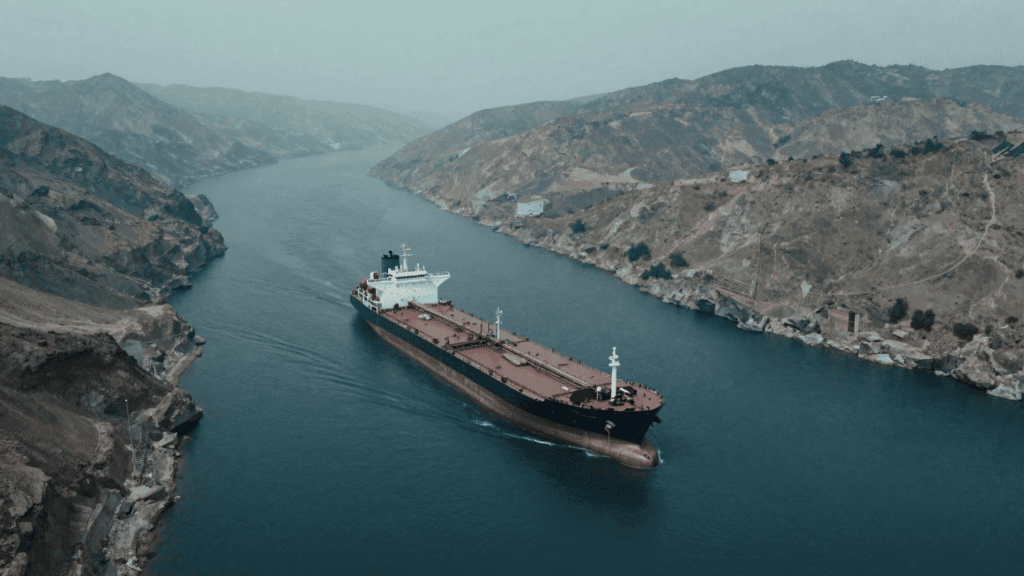
The crisis escalated again through late summer. Iran ruled out talks to extend the June 17 memorandum of understanding that was meant to open the strait while a nuclear deal was negotiated. After a month-long lull, fighting flared in early September: on September 2 the U.S. struck two Iranian government tankers under a new "tanker for tanker" policy aimed at deterring Iranian attacks on shipping, and by September 9 it had sunk five more near Kharg Island and in the Gulf of Oman, while Iran said it attacked 10 ships near the strait and fired missiles at U.S. forces in Jordan. Traffic remains a fraction of the roughly 130 daily transits before February 28; Windward counted 12 transits on September 22, several with transponders off, and the Joint Maritime Information Center still rates the strait's risk as severe, citing possible drifting mines.
The bypass routes have now come under attack as well. Drones struck Saudi Arabia's East-West Pipeline on September 10, and Riyadh shut the line on September 11, halting loadings at Yanbu. The pipeline had been rerouting about 4 MB/d, roughly 4% of global supply, to the Red Sea. With some European cargoes cancelled, Brent settled at $108.75 on September 15, its highest since May 19, about 54% above its July 2 low of $70.65. The pipeline restarted September 22 and Brent touched $97.36, then settled at $103.08 on September 23 after Iran's president vowed never to surrender. Tehran has signaled it would reopen the strait within seven days if Washington moves toward lifting the blockade, but no framework has been agreed.
The Strategic Petroleum Reserve has continued to fall, though more slowly than projected in July. It held 285.0 million barrels in the week ending September 11, the lowest since November 1982 and 39.9% of authorized capacity. That is 31.5 million barrels below the July 10 level, or about 14 days of U.S. consumption at 20.1 MB/d. The strain has shifted downstream: U.S. diesel is above $6 per gallon, past the June 2022 record, with refiners running at 98% utilization (see U.S. Diesel Price Spikes and Why an Export Ban Would Backfire).