
Special focus Strait of Hormuz and Oil Chokepoints Read EPRINC's research
EPRINC briefing

Strait of Hormuz and Oil Chokepoints

31 publications
Briefing summary

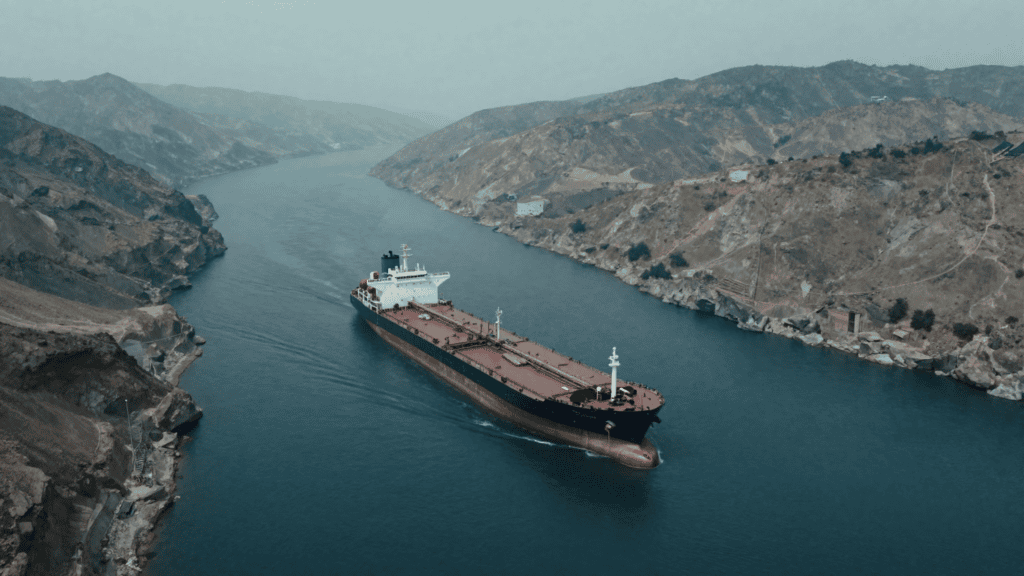
The crisis has entered a new phase, and the market's April–June de-escalation has reversed. On July 7 the U.S. revoked a license permitting Iranian oil sales and struck targets inside Iran; three tankers came under attack near Oman. On July 8, President Trump declared the ceasefire over and floated a takeover of the Kharg Island terminal; front-month Brent settled 5.2% higher at $78.02/bbl. Brent settled 9.59% higher again on July 13, at $83.30, and has traded near $85 since — roughly 20% above its July 2 low of $70.65. Reuters reported tanker transits fell to a two-month low by July 13; after the U.S. Navy reimposed its Hormuz blockade, only seven vessels crossed on July 15, down from 13 the day before.

The Strategic Petroleum Reserve, the second buffer that had helped cap prices earlier in the crisis, is now materially depleted: 316.5 million barrels as of the week ending July 10 — the lowest level since April 1983. Roughly 73 million barrels remain on the announced IEA-coordinated release; for context this is almost exactly the maximum drawdown allowed under the statutory floor for non emergencies (252.4 million barrels of reserve). At the completion of this release, the SPR will be lower than law has deemed is the minimum threshold for emergencies, just as we are entering phase 2 of the crisis. Both the diplomatic track and the stockpile buffer that anchored the April–June de-escalation have now been substantially withdrawn, which is the basis for characterizing this as a new era of the crisis.

What has happened to tanker traffic through the Strait of Hormuz?

How are oil, natural gas, fertilizer, and other commodities responding?

ChartWest Coast Product Receipts: The Jones Act Waiver’s Sixfold SurgeCombined April and May 2026 waterborne receipts of Gulf Coast petroleum products into the U.S. West Coast reached 377 thousand barrels per day,…Chart 2026-27ChartShifts in U.S. Jet Fuel Prices and Commercial Air TravelSince the end of February, U.S. jet fuel prices have risen over 80% to an average of $4.10 per gallon in May, up from the roughly $2.10 average that…Chart 2026-20ChartU.S. Gasoline Prices: Strait of Hormuz Closure vs. the Renewable Fuel StandardComparing U.S. retail regular gasoline price components between January 2024 and April 2026, EPRINC estimates that domestic crude costs have risen…Chart 2026-16ChartStrait of Hormuz Closure: Gasoline and U.S. Fuel PricesAlthough the United States remains largely insulated from the physical shortfalls triggered by the Strait of Hormuz closure, its internationally…Chart 2026-15ChartStrait of Hormuz Closure: The Arithmetic of the Crude Shortfall after Five Weeks of PolicyThis week's chart tracking the policy mitigation efforts and breaking down the alarming headline "20% of global oil supply" into a precise arithmetic problem — showing exactly which offsets are holding the crude market together, which ones depend on Iran's goodwill, and how much margin remains if any single piece fails.Chart 2026-14ChartStrait of Hormuz Closure: Helium and Semiconductor ManufacturingLast week's chart on Qatari helium supply disruption. Qatar produces 35% of global helium—now entirely offline—with cascading effects on semiconductor fabrication, MRI systems, and aerospace. Term contract prices have doubled since the closure began.Chart 2026-13ChartStrait of Hormuz Closure: Nitrogen Based Fertilizers and Disruptions to Food SecurityEarlier chart on the fertilizer supply shock. Roughly one-third of global seaborne fertilizer trade transits Hormuz, and urea prices have surged over 50% since hostilities began, threatening Northern Hemisphere planting.Chart 2026-12

What role can the Strategic Petroleum Reserve play?

How do Iran sanctions relate to this crisis?

What are the broader energy security implications?

What are the historical precedents for chokepoint disruption?

Further research

EPRINC / PIRINC historical archive Browse EPRINC and PIRINC publications from 1944 to 2012 →