
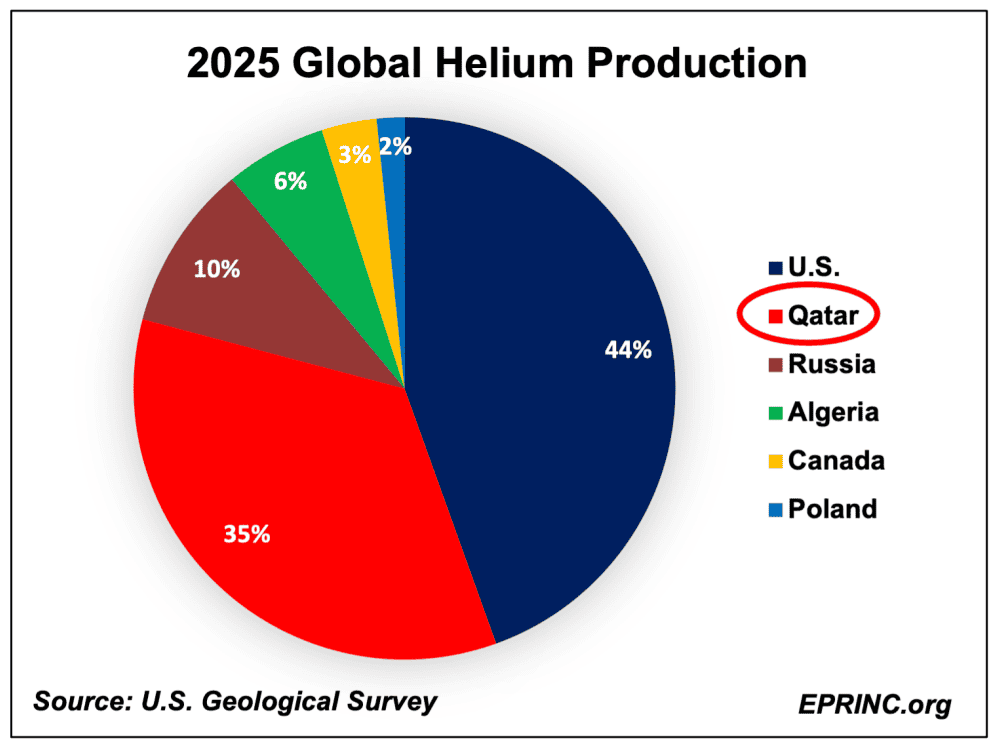
Now in its fifth week, the Israel/U.S.-Iran War has led to the closure of the Strait of Hormuz, a channel that carries 25% of global crude oil supplies, 20% of global LNG trade, and 8.3% of global fertilizer production. Among the less-noted commodities affected is helium: Qatar, which routes its exports through the strait, is the world’s second-largest supplier at 63 million cubic meters (mcm), or 35% of global supply.
Helium occurs in trace amounts as a coproduct of natural gas production and is critical to a range of advanced applications. This week’s chart shows the composition of global demand: computer chip, flat-panel display, and fiberoptic cable manufacturing account for 17%; magnetic resonance imaging (MRI) for 15%; and rocket and satellite propulsion for 9%.
The regional exposure is concentrated. Korean and Taiwanese semiconductor manufacturers rely on Qatari helium for up to 50% of their requirements, leaving them particularly vulnerable to the disruption. Global helium demand is projected to grow at an annualized 6%, rising from 182 mcm in 2025 to 246 mcm in 2030, driven by AI chip production, aerospace demand, and the U.S. CHIPS Act.
Helium term pricing typically ranges from $350 to $750 per thousand cubic feet ($12,360 to $26,486 per thousand cubic meters). With Qatari supplies absent from global markets, prices have doubled and could climb further if the Hormuz closure persists.
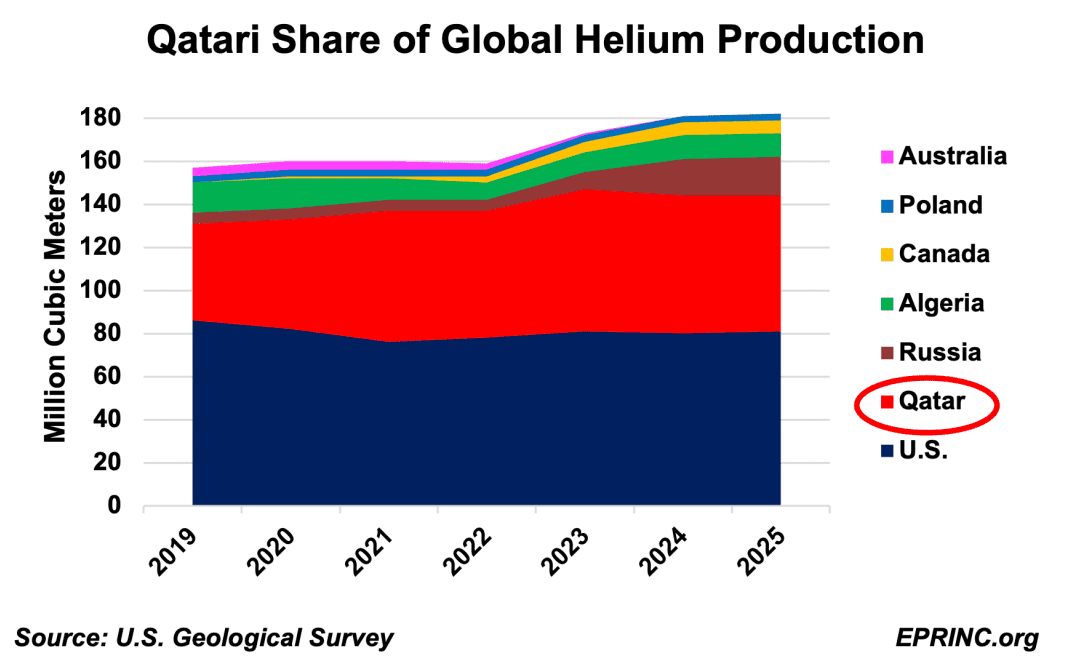
Fig. 2 of 2 · Chart 2026-13 · Source: EPRINC
With the rise in demand for AI chips and aerospace requirements along with the passage of the U.S. CHIPS act, global helium demand is projected to rise at an annualized rate of 6% to 246 mcm in 2030 from 182 in 2025.Helium term pricing ranges from $350 to $750 per thousand cubic feet ($12,360 to $26,486 per thousand cubic meters).
With the absence of Qatar’s helium supplies from global markets, prices begun to double; potentially, they could surge even higher if the Hormuz closure continues indefinitely.
For more information on these charts, please contact Max Pyziur (maxp@eprinc.org) or Matthew Sawoski (matthews@eprinc.org).
EPRINC is aggregating its work on the current crisis under Special Focus: Crisis at the Strait of Hormuz. Related discussion appears in Salon’s “Trump’s war may hasten the end of oil and gas dependence,” featuring EPRINC’s Max Pyziur, UC San Diego’s David Victor, and Rice University’s Ken Medlock.
From the EPRINC Chart of the Week archive.
Cite: EPRINC, “Strait of Hormuz Closure: Helium and Semiconductor Manufacturing,” Chart of the Week 2026-13, March 23, 2026.