
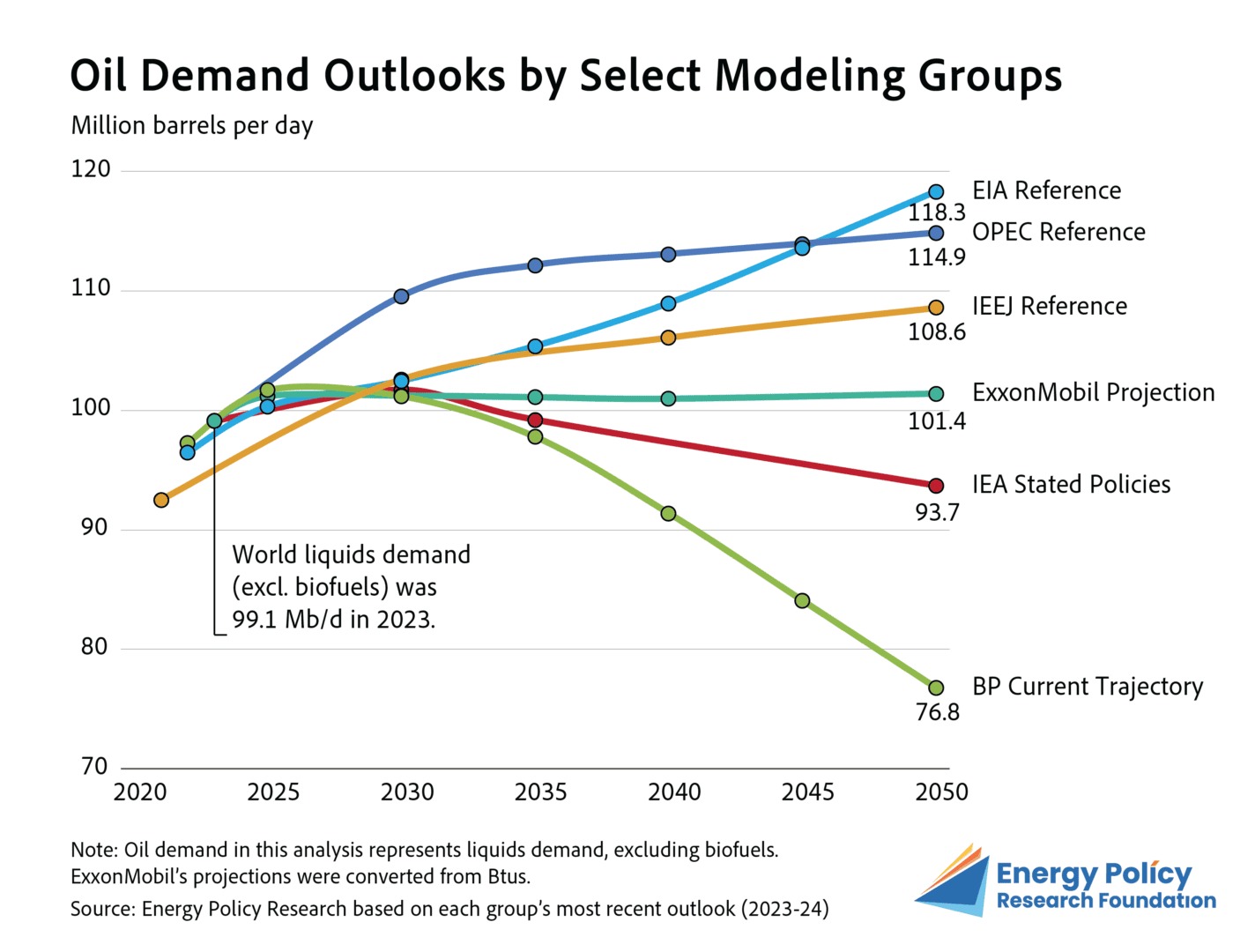
As shown in this week’s COW, modeling efforts have largely failed in narrowing uncertainties about future outcomes. The forecasts in the chart, from established institutions, show a wide range of future outcomes. Forecasts for as soon as 10 years from now vary by more than 10 million barrels a day in 2035, indicating massive differences in required investments.
Modeling efforts are often distorted by concerns that calculated outcomes seem unrealistic. It is not uncommon for modelers to adjust model performance metrics to meet aspirational expectations and adjust long-term assumptions based on recent events.
The outlooks from BP and IEA include optimistic, and likely unrealistic, assumptions on the deployment of new technologies and renewable fuels as well as the deployment of unprecedented advancements in worldwide electrification. The capacity of these models to accurately project the pace of technological progress and long-term policy changes remains limited.
Policy makers should recognize the inherent uncertainties in forecasts and design energy policies that can remain robust under uncertainties. Net zero is neither inevitable nor achievable without massive and risky investments.
From the EPRINC Chart of the Week archive.
Cite: EPRINC, “Large Uncertainties Remain on Long-term Petroleum Demand,” Chart of the Week 2024-42, October 14, 2024.