
Russia relies on commodity export tariffs, including those on crude oil and petroleum products, to fund the bulk of its national treasury requirements. Russia’s invasion and ongoing aggression against Ukraine, which began in February 2014 and escalated to full invasion in February 2022, prompted a wide range of sanctions and boycotts against Russian commodity production and exports. These measures seek to economically constrain and potentially eliminate the funding of Russia’s war effort.
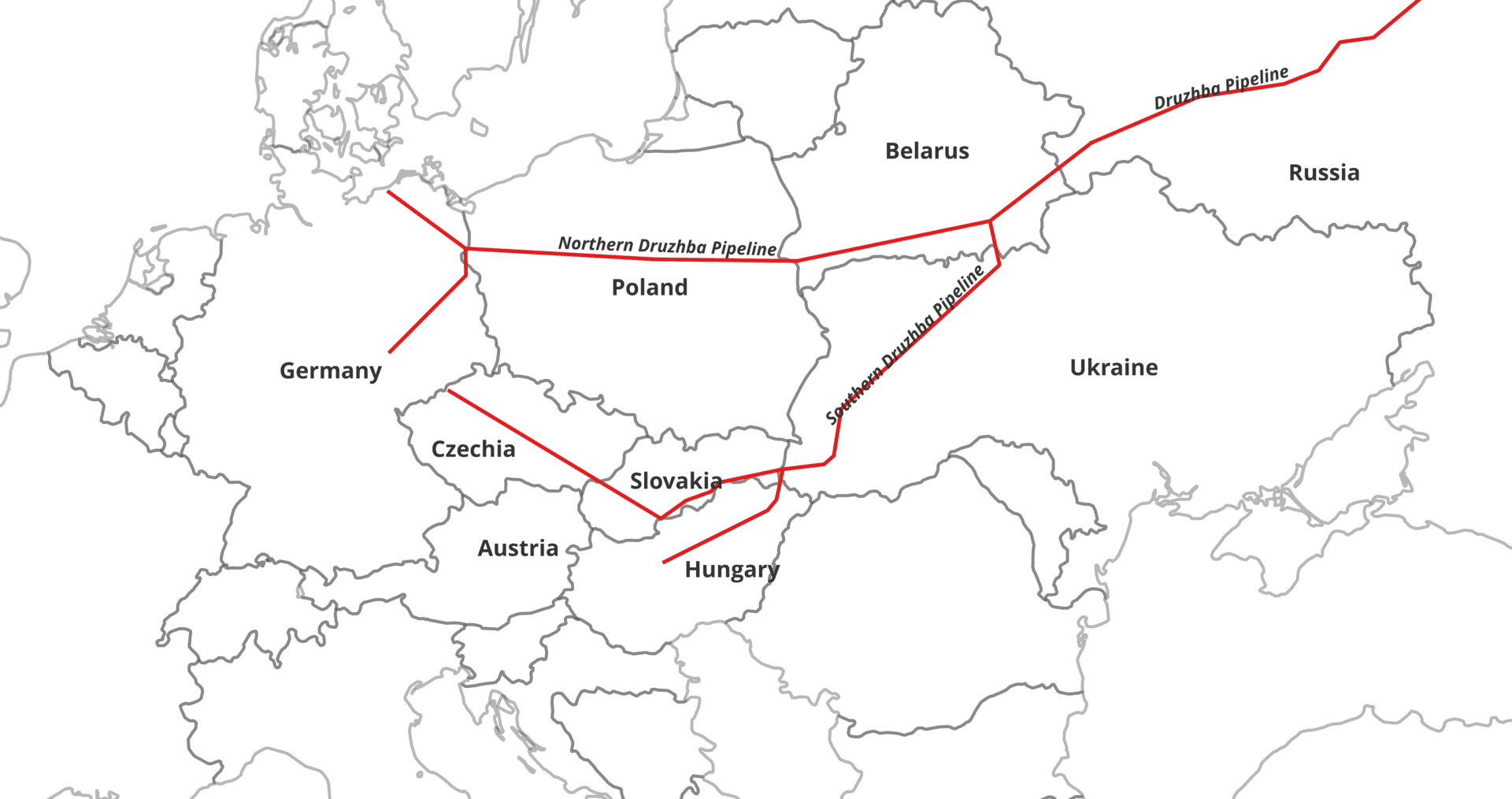
Among the key EU sanctions imposed in December 2022 was a ban on all Russian crude oil imports, both pipelined and shipped by vessel. Russian pipeline crude reaches Europe via the Druzhba Pipeline system, which was fully commissioned in 1964 and until recently delivered up to 1.2 million barrels per day to destinations in Austria, Germany, Poland, Czechia, Slovakia, and Hungary.
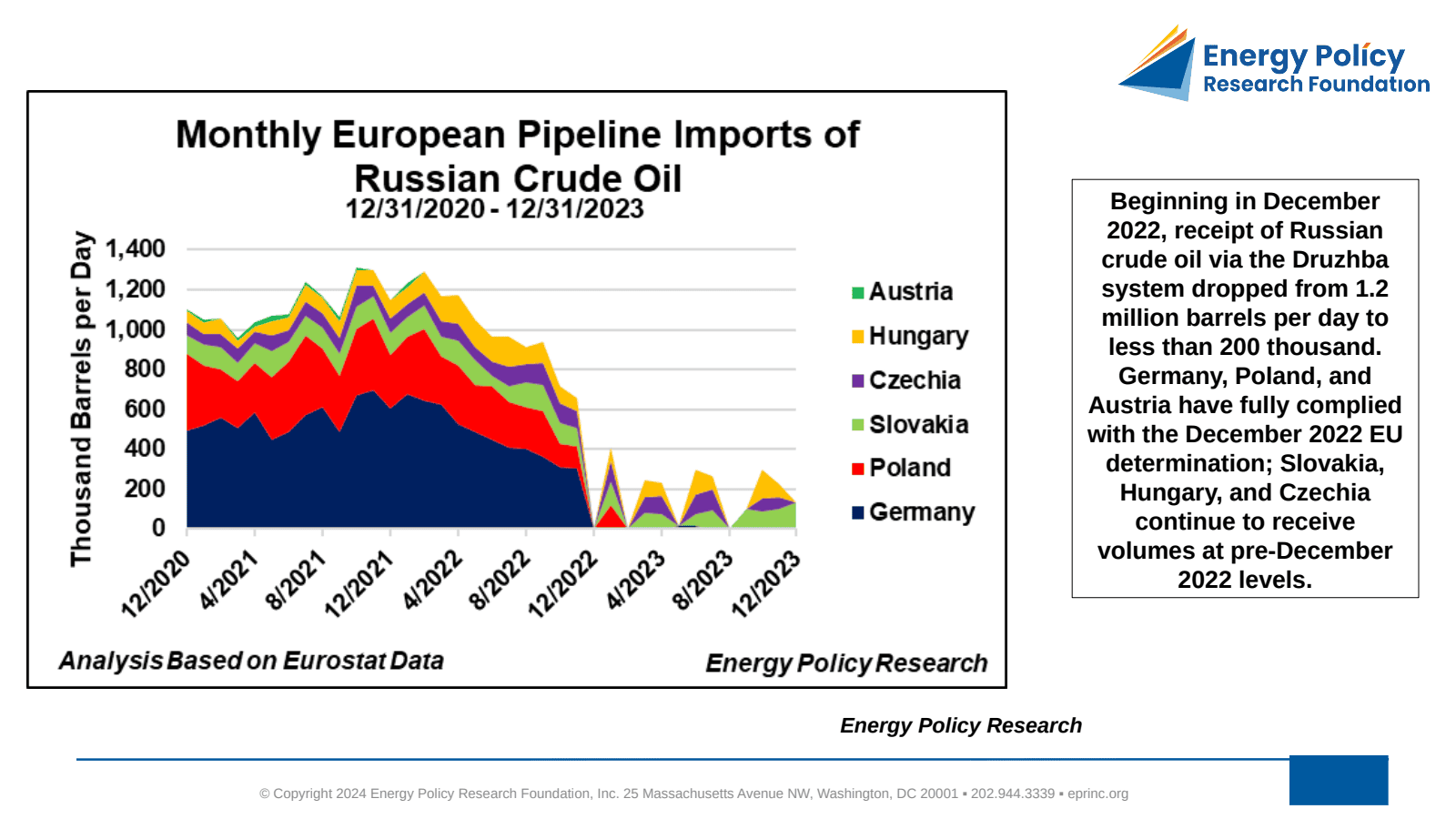
Since December 2022, receipts of Russian crude via the Druzhba system have fallen from 1.2 million barrels per day to less than 200,000 barrels per day. Germany, Poland, and Austria have fully complied with the EU determination, while Slovakia, Hungary, and Czechia continue to receive volumes at pre-December 2022 levels.
While the sanctions have created challenges for Russia, opportunities for circumvention and shirking remain. Russia’s national treasury continues to benefit from its commodity exports—notably crude oil and petroleum products, and to a lesser degree natural gas—revenue that facilitates domestic military manufacturing as well as the acquisition of materiel from Iran, North Korea, and China.
From the EPRINC Chart of the Week archive.
Cite: EPRINC, “Russian Pipeline Crude Oil Exports to Central Europe: Who is Complying with the Sanctions?,” Chart of the Week 2024-10, March 4, 2024.