
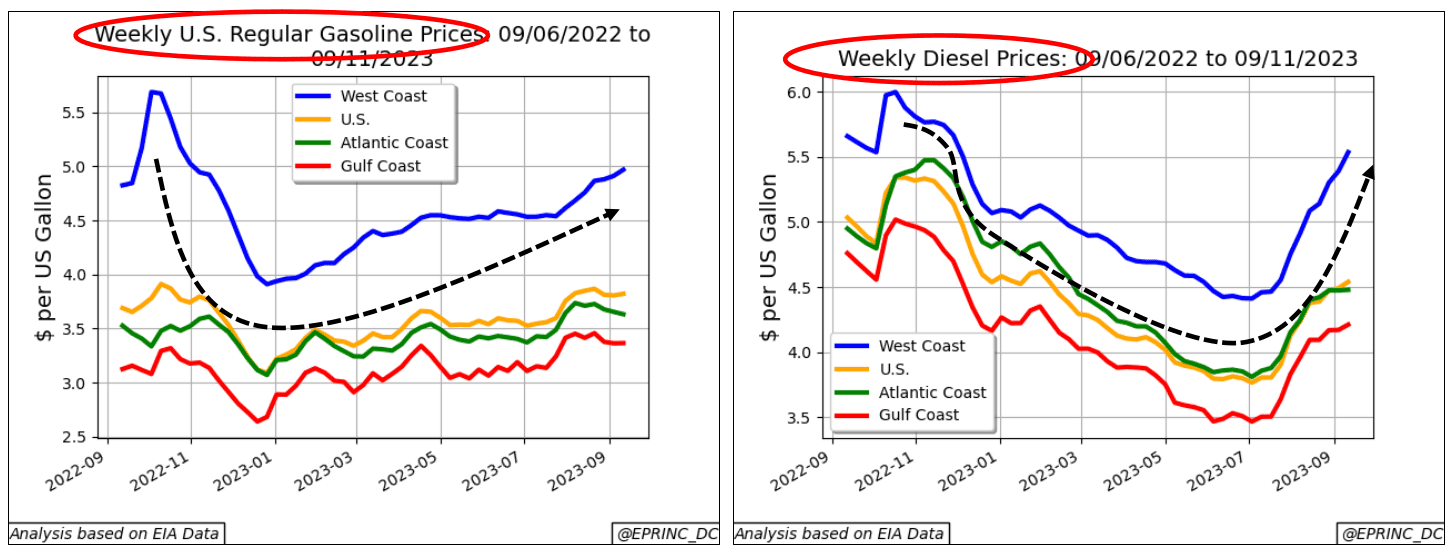
The chart tracks U.S. transportation fuel prices, which climbed to twenty-year (non-inflation-adjusted) highs in the late summer of 2022 before easing, and have since resumed a sharp upward trajectory. The Biden Administration helped moderate the 2022 increase through a 600 million barrel drawdown of the U.S. Strategic Petroleum Reserve (SPR).
Several factors are contributing to renewed price pressure. OPEC+ members have increasingly curtailed crude oil supplies to bolster global oil benchmark prices, pushing fuel prices higher. At the same time, the administration is seeking to constrain future U.S. oil and gas production, including through the cancellation of leases on federal lands such as Alaska’s Arctic National Wildlife Refuge (ANWR).
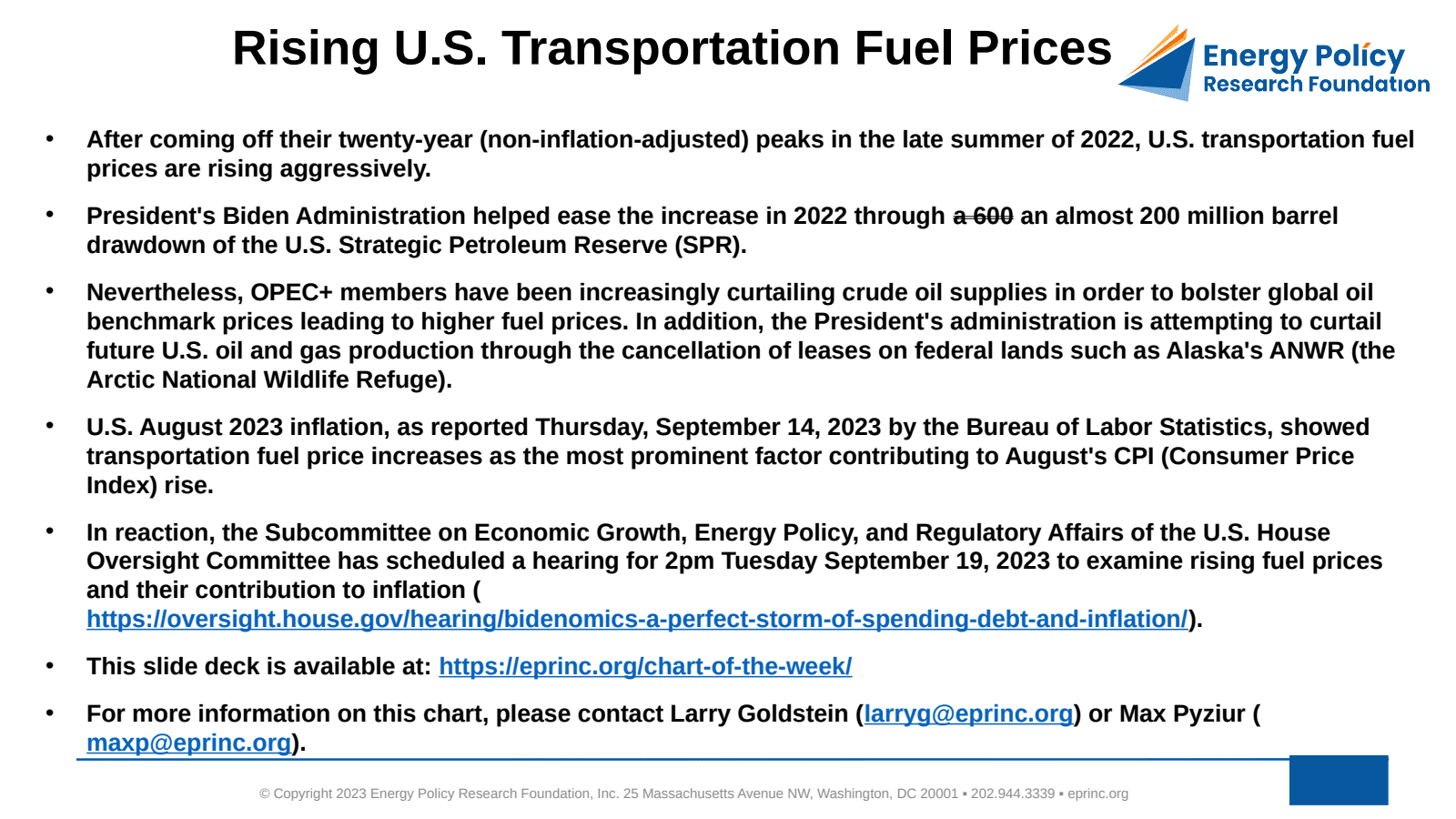
The policy stakes are reflected in the inflation data: U.S. August figures reported on September 14, 2023 by the Bureau of Labor Statistics identified transportation fuel price increases as the most prominent factor behind August’s rise in the Consumer Price Index (CPI). In response, the Subcommittee on Economic Growth, Energy Policy, and Regulatory Affairs of the U.S. House Oversight Committee scheduled a hearing for September 19, 2023 to examine rising fuel prices and their contribution to inflation.
For additional perspective on the policy options available to the administration, EPRINC President Emeritus Larry Goldstein has published “The Cluttered Table.”
From the EPRINC Chart of the Week archive.
Cite: EPRINC, “Rising U.S. Transportation Fuel Prices,” Chart of the Week 2023-36, September 4, 2023.