
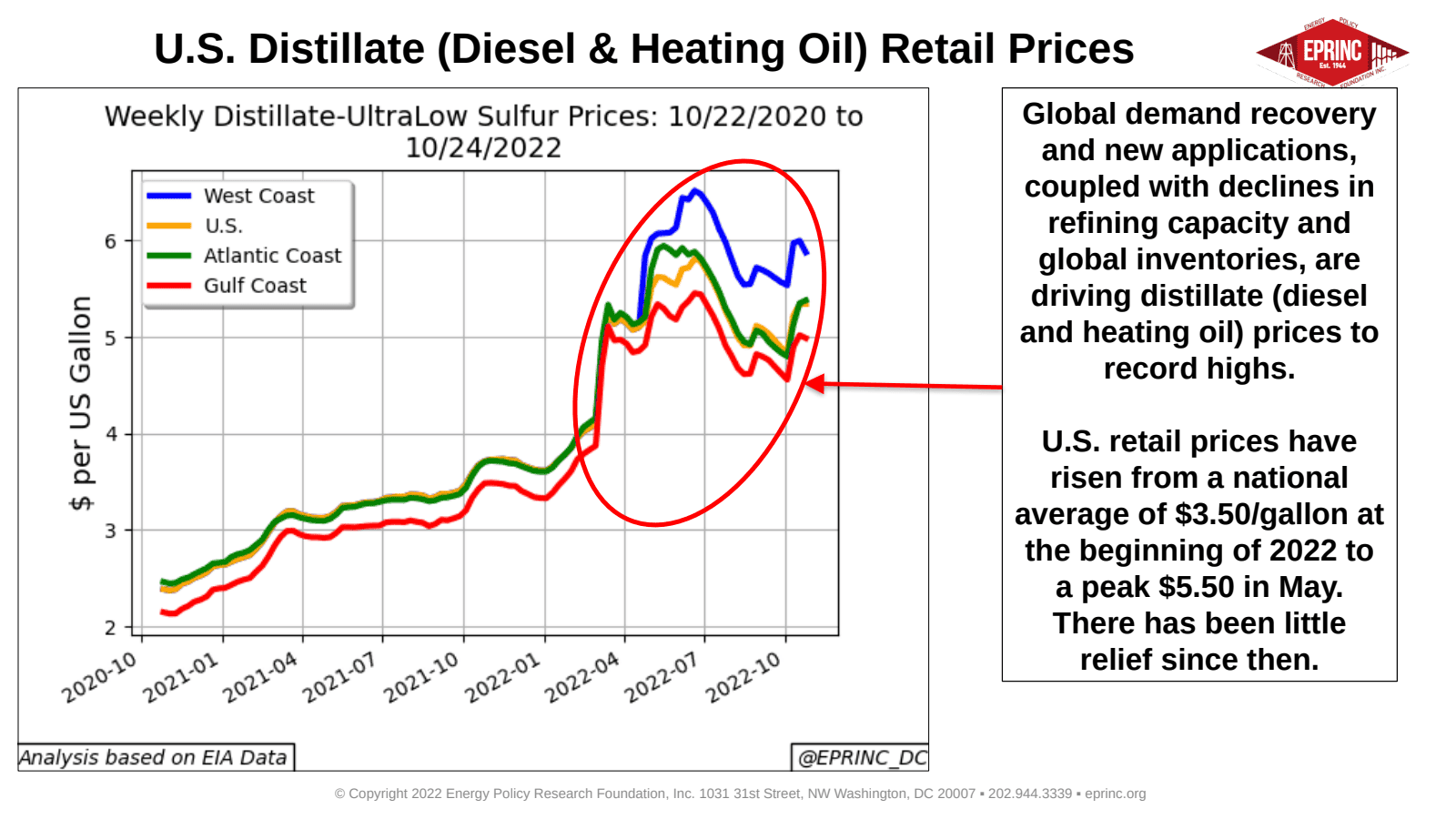
Recovering global demand and new applications, together with reduced refining capacity and lower global inventories, have pushed distillate (diesel and heating oil) prices to record highs. U.S. retail prices rose from a national average of $3.50/gallon at the start of 2022 to a peak of $5.50 in May, with little relief since.
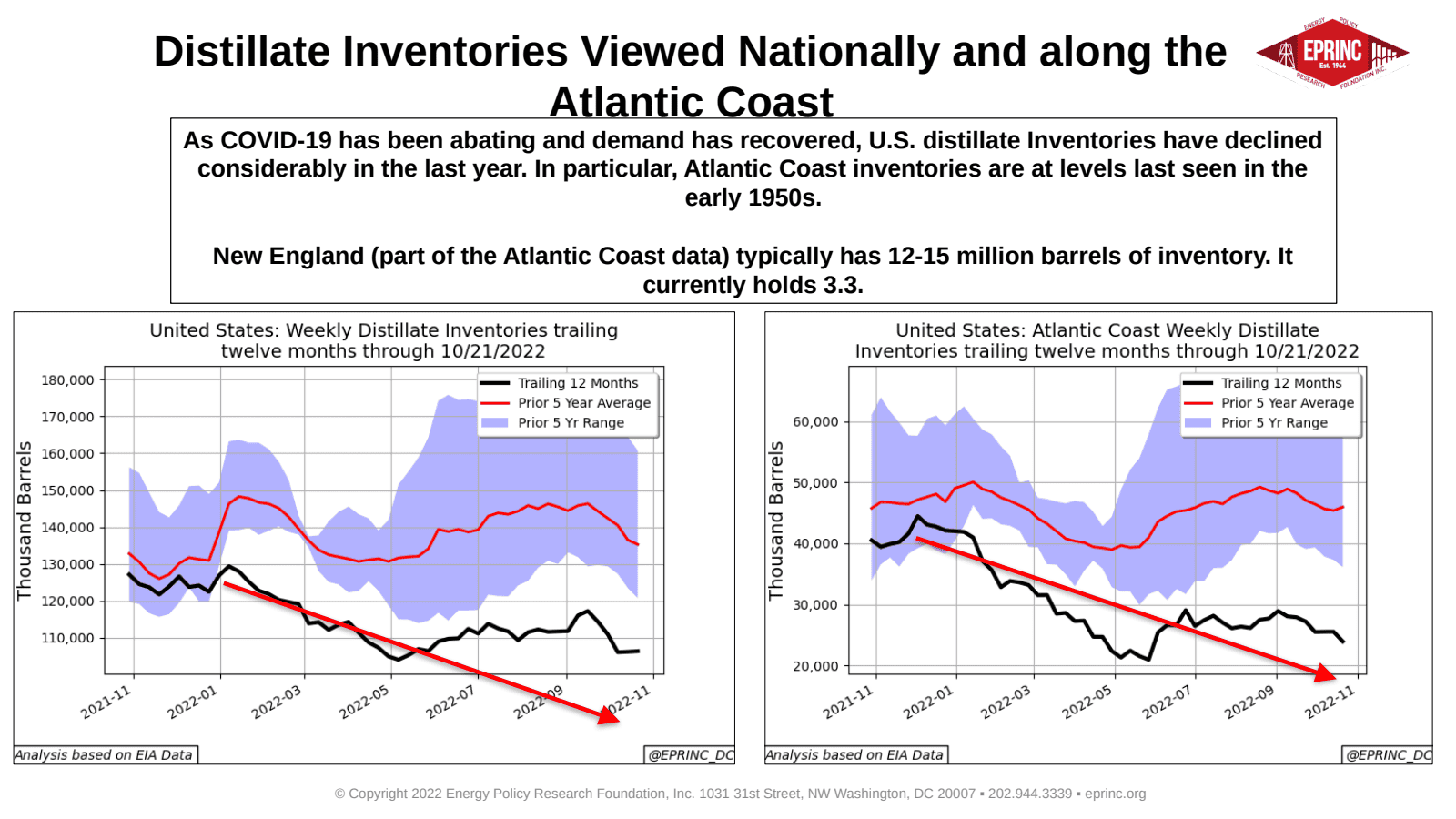
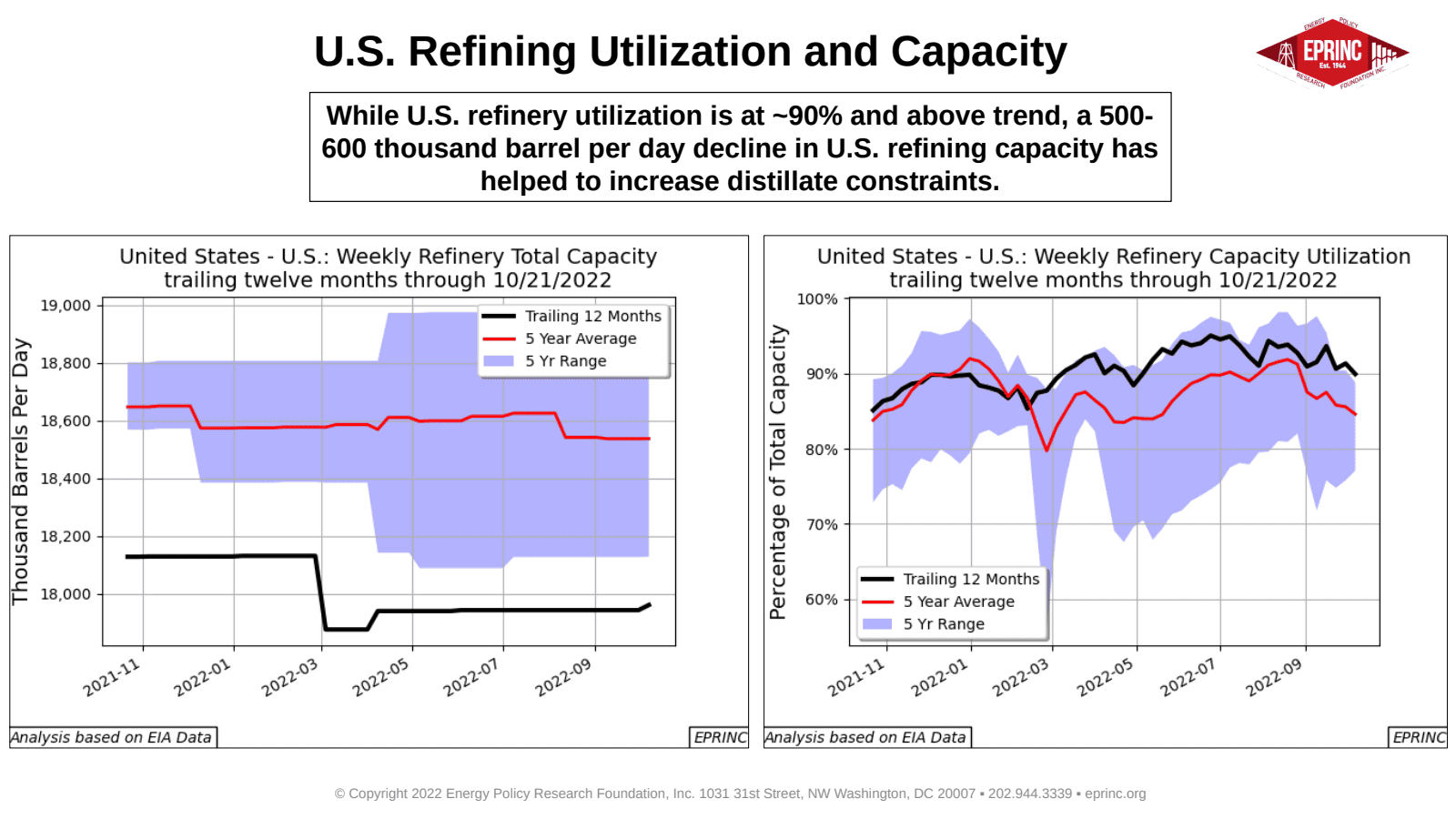
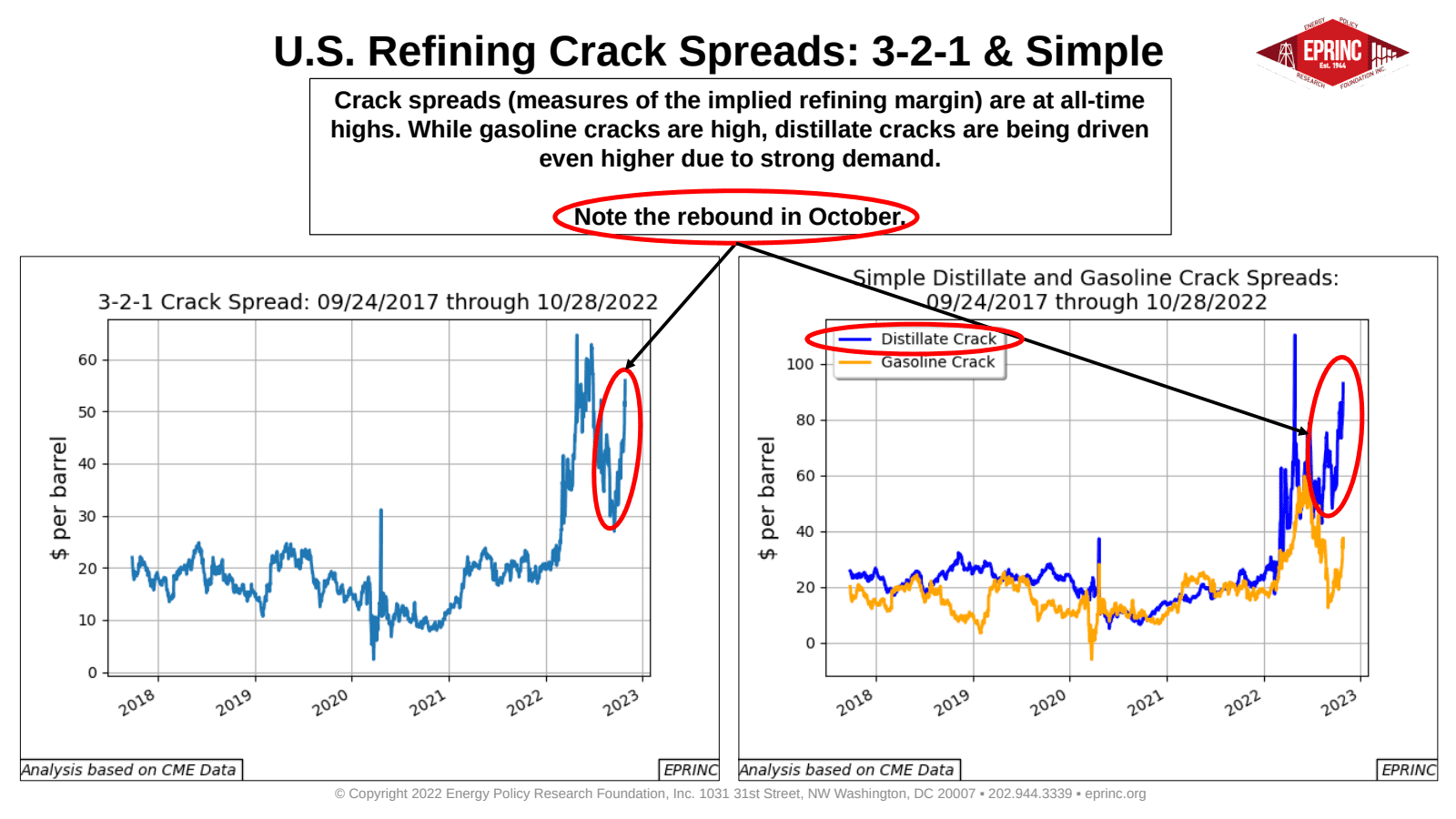
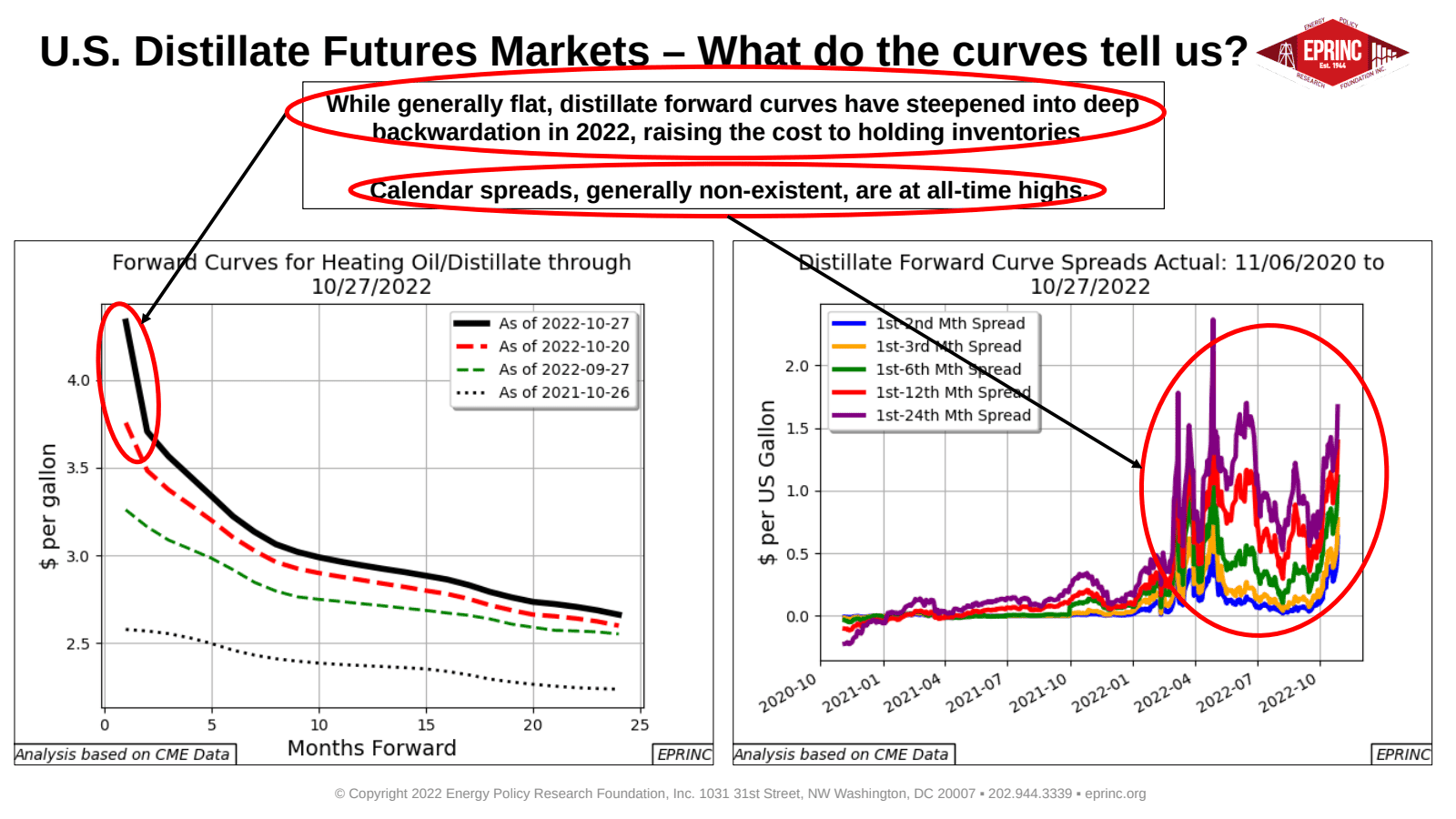
- Global demand recovery and new applications, coupled with declines in refining capacity and global inventories, continue to drive distillate (diesel and heating oil) prices to record highs. U.S. retail prices have risen from a national average of $3.50/gallon at the beginning of 2022, peaking at $5.50 in May, and there has been little relief since then with the national average staying firmly above $5/gallon.
- Distillate, in its primary form as diesel, is the bedrock fuel for rail and truck freight movement, most agricultural machinery, and electricity production in select markets such as Hawaii. There are no substitutes available. In addition, co-generation facilities use diesel when natural gas prices are higher on an energy basis.
- With the IMO2020 desulfurization regulations, distillate consumption was expected to expand in maritime usage. That was delayed by the pandemic; but now with the pandemic receding and the increase in maritime trade, distillate consumption has expanded in maritime usage.
- With the Russian war against Ukraine, Russian distillate exports, especially to Europe, have declined substantially as embargoes loom. In addition, Russia’s war has caused more of its distillate to be used in its land-based military equipment.
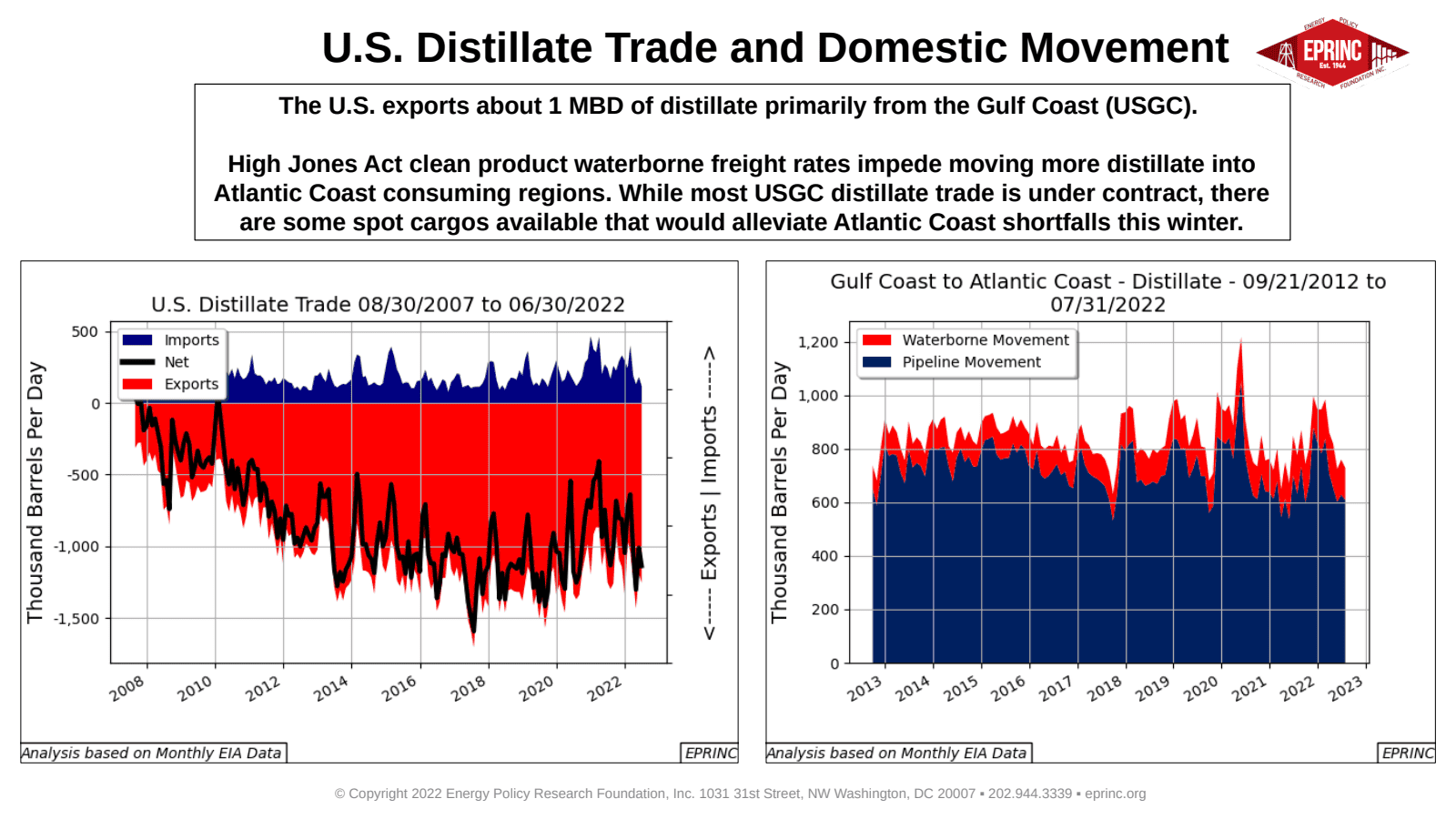
- Despite considerable U.S. Gulf Coast production, high Jones Act clean product waterborne freight rates prevent more distillate from being moved into Atlantic Coast consuming regions where it is used to heat buildings.
From the EPRINC Chart of the Week archive.
Cite: EPRINC, “Revisited: Overview of Tight Distillate Markets,” Chart of the Week 2022-41, October 10, 2022.