
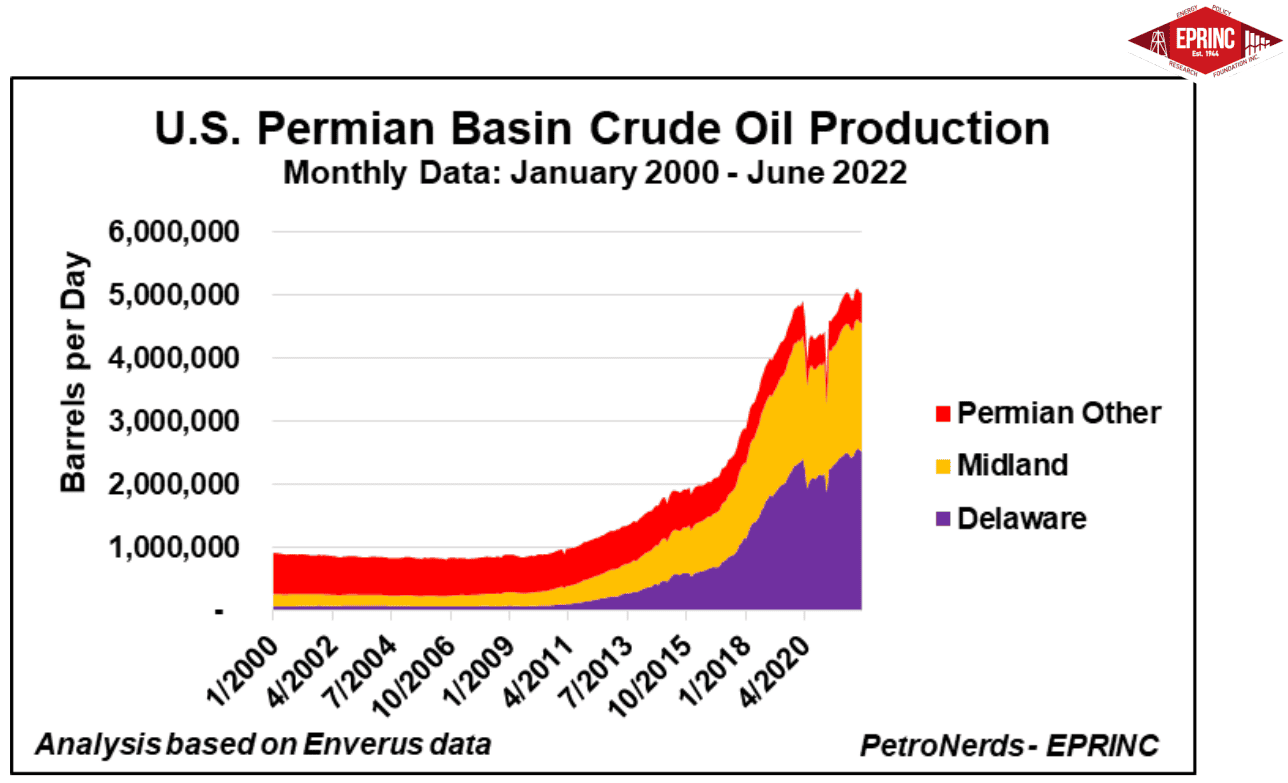
Crude oil production in the Permian Basin has demonstrated notable resiliency, sustaining output levels across recent market conditions.
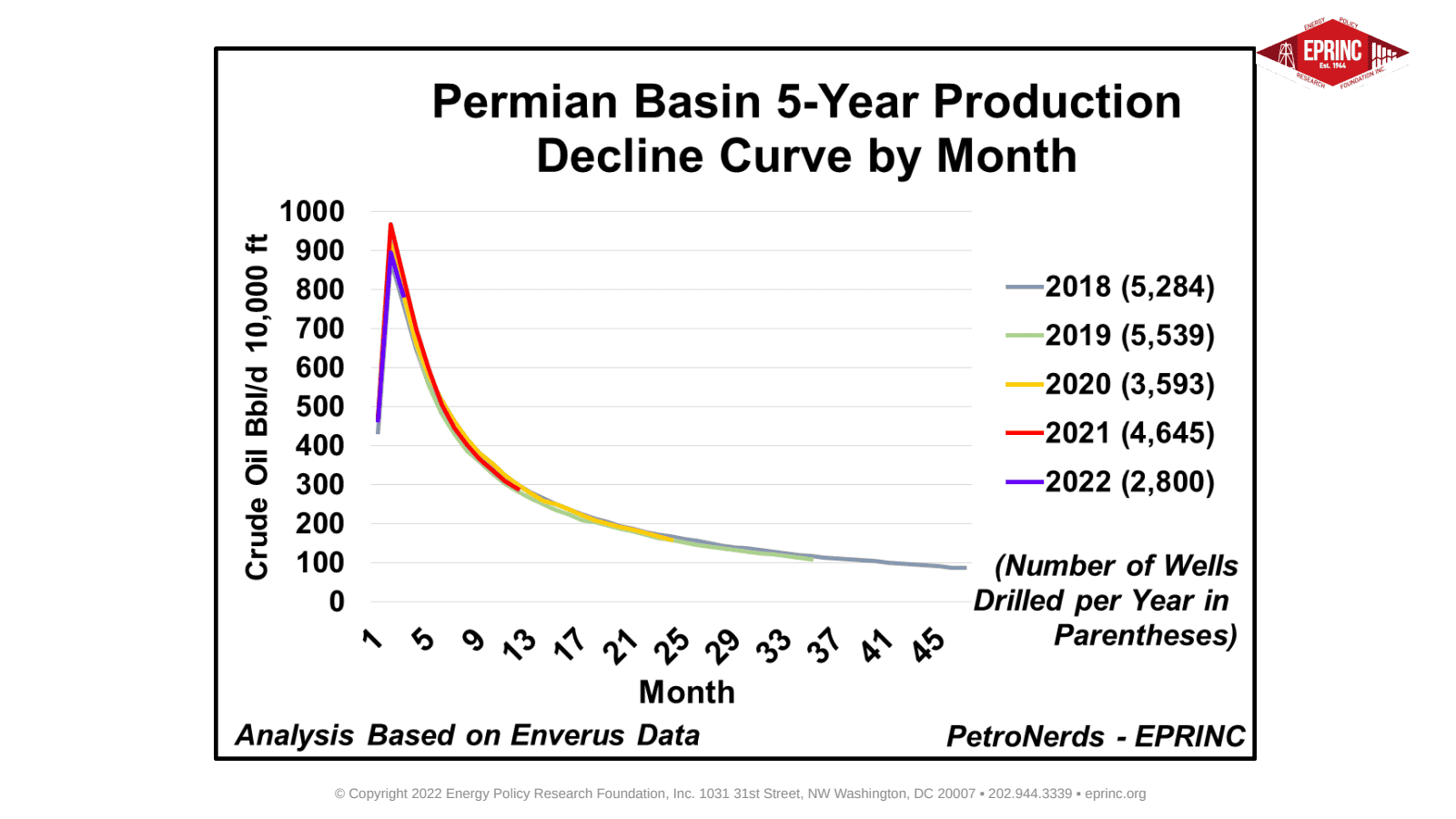
The United States’ most prolific crude oil producing region is the Permian Basin, located in southern New Mexico and Western Texas. It began producing oil in 1931.
Starting in 2010, newly developed hydrofracturing and horizontal drilling techniques, which first were used at large scale in North Dakota’s Bakken formation, began being used in the Permian region.
In this most recent period, the Permian’s production has risen from an average of 1 million barrels per day (MBD) to 5 MBD during 2022, an annualized increase of over 14%. Based on current U.S. crude oil production of almost 12 MBD, the Permian accounts for 43% of the total.
While the COVID pandemic caused U.S. production to drop overall during 2020, Permian production has rebounded more quickly than other regions and has returned to and even exceeded prior producing levels. This is due to the hundreds of private operators that began aggressively drilling the Permian in 2021 as the pandemic began to recede.
Publicly-owned operators have been less aggressive than private ones in ramping their production, and only began increasing their rig counts during 2022.
To note, two small counties in New Mexico (Lea and Eddy counties) produce 1.6 million barrels per day, nearly three times that of California and Alaska combined.
Despite what some analysts have suggested, Permian Basin productivity has not only been sustained, it has been improved.
For more information on this chart, please contact Trisha Curtis (trisha@petronerds.com).
From the EPRINC Chart of the Week archive.
Cite: EPRINC, “Resiliency of Crude Oil Production in the Permian Basin,” Chart of the Week 2022-42, October 17, 2022.