
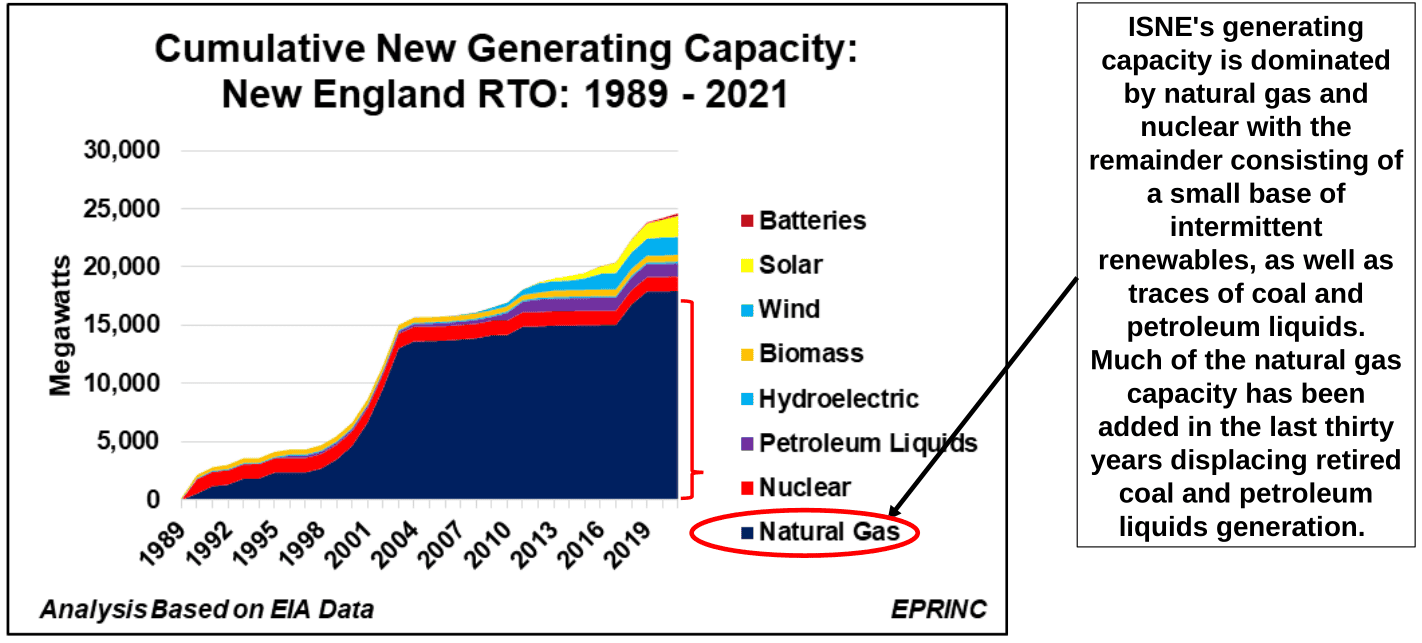
At peak winter demand, ISO New England generates approximately 12 thousand megawatts per hour, drawing an average of 46% from natural gas and 29% from nuclear generation.
Independent Service Operator New England (ISNE) operates the electricity grid for six Northeastern U.S. states: Connecticut, Maine, Massachusetts, New Hampshire, Rhode Island, and Vermont. Together, they have a population of over 15 million in an area of almost 63 thousand square miles, about a quarter of the area of Texas.
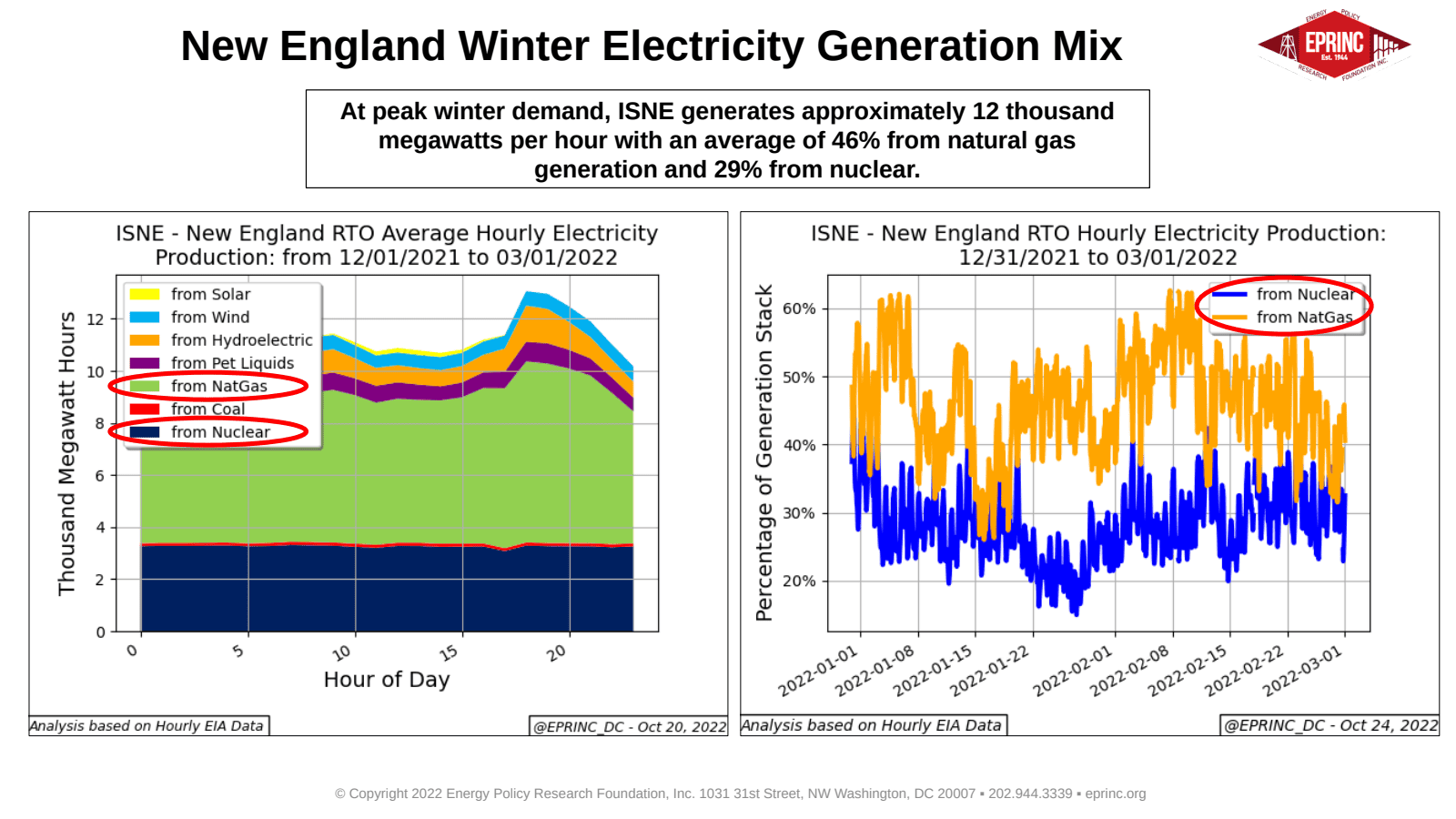
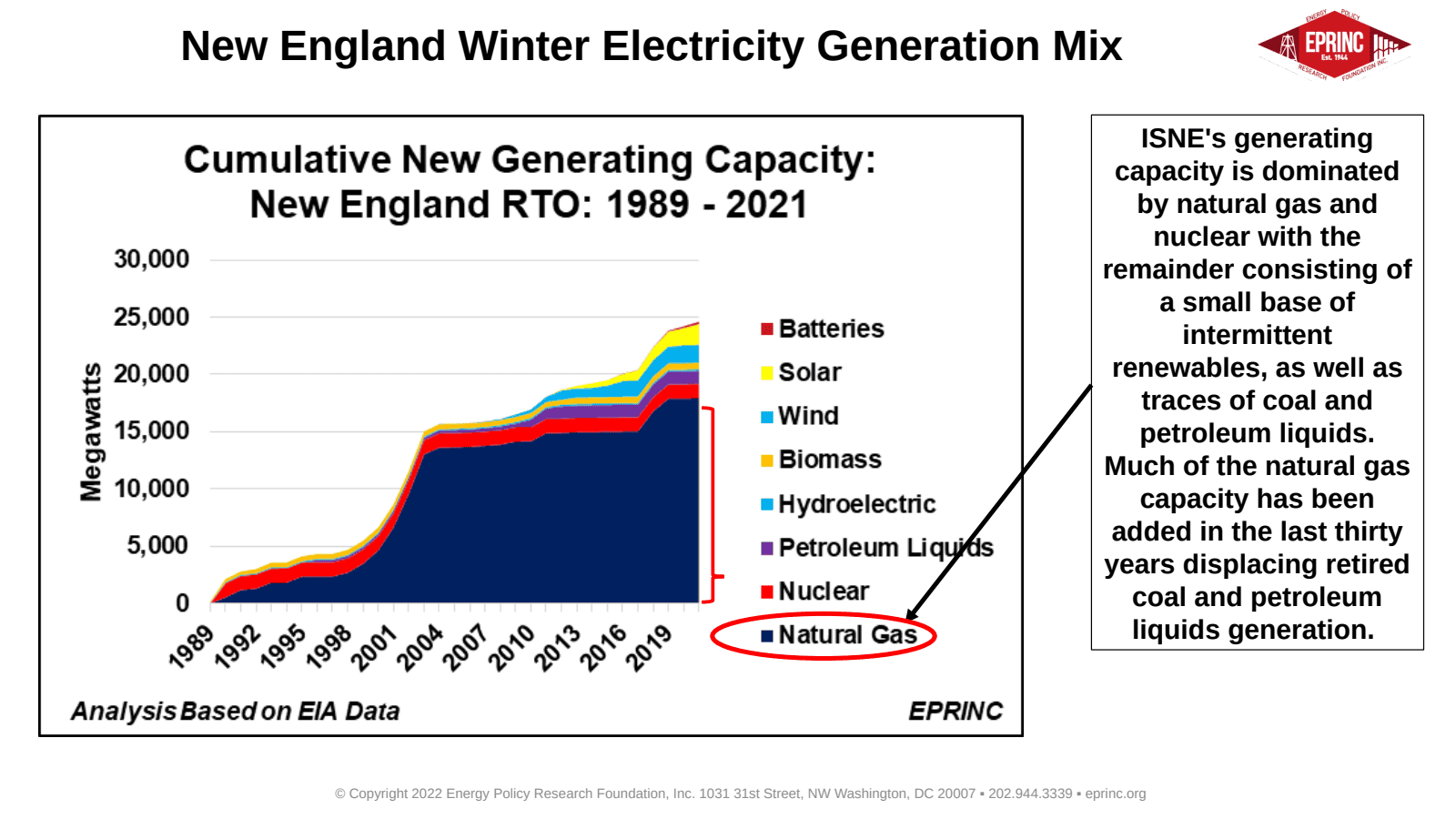
ISNE’s generating capacity is dominated by natural gas and nuclear, with the remainder consisting of a small base of intermittent renewables, as well as traces of coal and petroleum liquids. Much of the natural gas capacity has been added in the last thirty years, displacing retired coal and petroleum liquids generation. At peak winter demand, ISNE generates approximately 12 thousand megawatts per hour, with an average of 46% from natural gas generation and 29% from nuclear.
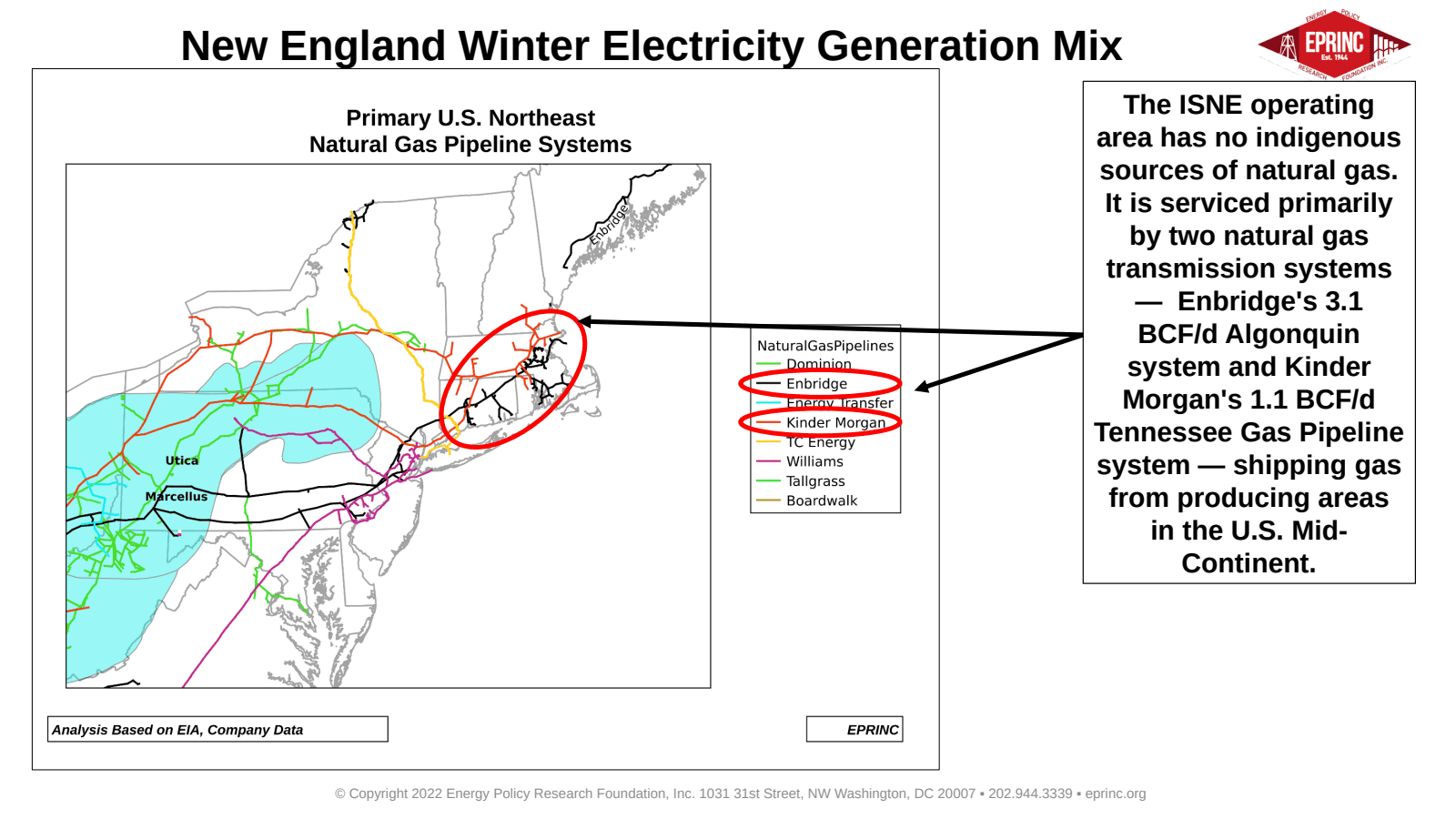
The ISNE operating area has no indigenous sources of natural gas. It is serviced primarily by two natural gas transmission systems — Enbridge’s 3.1 BCF/d Algonquin system and Kinder Morgan’s 1.1 BCF/d Tennessee Gas Pipeline system — shipping gas from producing areas in the U.S. Mid-Continent. Critically, natural gas-fired generation is the most responsive to rapid shifts in demand, especially those from sudden cold winter weather.
From the EPRINC Chart of the Week archive.
Cite: EPRINC, “New England Winter Electricity Generation Mix: Some Considerations,” Chart of the Week 2022-40, October 3, 2022.