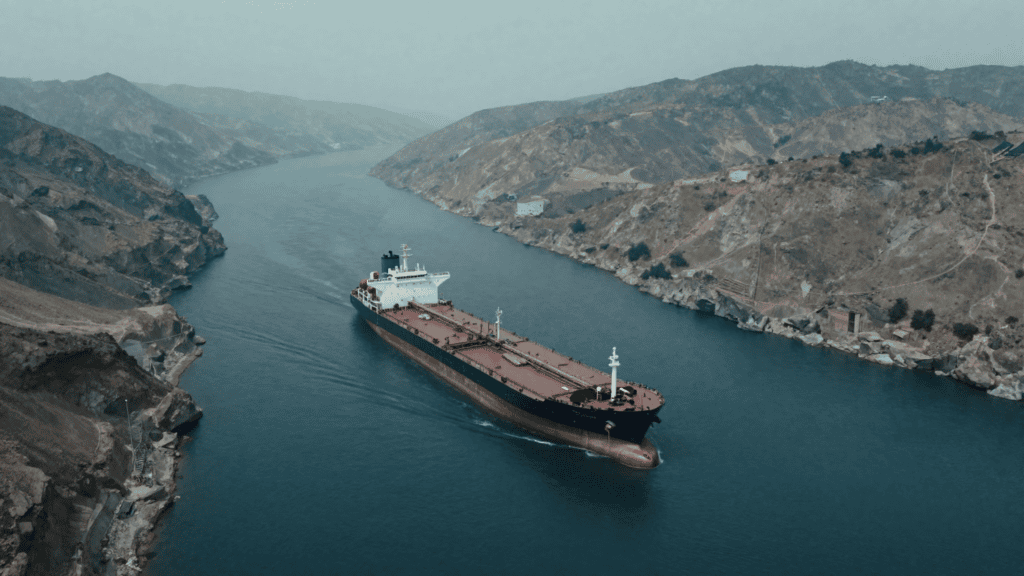
Iran & the Strait of Hormuz
The Strait of Hormuz is the world’s most critical energy chokepoint. Approximately 18–20 million barrels per day of crude oil and roughly 20% of global LNG exports transit its 21-mile-wide shipping lane, representing about one-fifth of global petroleum supply.
On February 28, 2026, the United States and Israel launched coordinated strikes against Iran under Operation Epic Fury, killing Supreme Leader Ali Khamenei. Iran retaliated with missile and drone attacks against U.S., Israeli, and other regional targets, and the IRGC declared the strait closed to all vessel traffic. By March 5, seven of the twelve major marine insurers had cancelled coverage across the Persian Gulf, collapsing tanker traffic from roughly 138 daily transits to near zero. The IEA has described the resulting disruption as the most severe supply shock in the history of the oil market, with an estimated 12–15 million barrels per day of crude and refined product flow interrupted. Iraq declared force majeure on all foreign-operated oilfields on March 20. Gulf producers have collectively cut output as storage saturation left them with no export path. Global LNG supply fell an estimated 20%. Iran confirmed at least 21 attacks on merchant vessels and reportedly laid sea mines throughout the strait.
A fragile two-week ceasefire, announced April 7–8, has produced a sharp but incomplete market response. Trump agreed to suspend planned strikes on Iranian civilian infrastructure less than two hours before his 8 p.m. deadline, citing a 10-point Iranian proposal as a workable basis for negotiations. Brent futures settled at $94.75 on April 8, a 13% single-day decline and the largest daily drop since April 2020. WTI settled at $94.41. Both benchmarks remain roughly $30 above their pre-war levels of February 27. The ceasefire has already shown signs of fracture: Israel struck Lebanon the same night it took effect, prompting Iran to declare a ceasefire violation and the IRGC to again halt tanker traffic. As of the morning of April 9, futures have rebounded toward $98–$100 on uncertainty about whether the agreement holds. The spot price for near-term Brent cargo delivery remains approximately $124 per barrel, reflecting the physical supply backlog that will persist regardless of diplomatic progress. Goldman Sachs projects Brent will average above $100 through 2026 if the closure continues another month.
The physical backlog inside the Gulf is substantial. As of April 8, 187 tankers carrying approximately 172 million barrels of crude and refined products remain stranded inside the Gulf. Kuwait Petroleum Corporation’s CEO told the CERAWeek conference that full Gulf production restoration will require three to four months even after the strait reopens. The first round of formal U.S.–Iran negotiations under the ceasefire is scheduled for Saturday in Islamabad, led by Vice President Vance, Special Envoy Steve Witkoff, and Jared Kushner.
Transit terms remain the central unresolved issue. Iran’s Foreign Ministry has declared that all vessels seeking to pass through the strait must coordinate directly with Iranian armed forces, and Iranian state media has reported plans for transit fees to be collected in cryptocurrency through a joint Iran–Oman arrangement. The White House has stated unambiguously that the strait must reopen without limitations of any kind, including tolls. Russia and China vetoed Bahrain’s UN Security Council resolution on April 7. Iran’s parliament continues to advance legislation to formally codify Iranian sovereign authority over the strait. Whether the ceasefire translates into commercially viable transit depends on the resolution of these terms at Islamabad. Beyond energy, the closure has driven urea prices up roughly 50%, disrupted helium supply from Qatar (35% of global production), and threatened Northern Hemisphere planting windows. The situation remains highly fluid.
Further Questions
EPRINC research on this topic, organized by the questions it addresses.