

Europe and Ukraine hold a combined 5 tcf of natural gas storage capacity (4 tcf and 1 tcf, respectively), but this year’s refill has fallen well short of what that capacity implies. Mid-year replenishments peaked at 4.2 tcf in November 2023 and have not recovered since. As of mid-August 2026, EU storage stood at roughly 61% full, the lowest level for the date in records dating back to 2009 and well below the roughly 82% five-year seasonal norm.
The shortfall coincides with the broader shift in European import structure: pipeline-majority supply has given way to LNG-majority supply, with the bulk of Europe-bound LNG now sourced from the U.S (figure below). Despite that pivot, total European natural gas imports continue to trend lower. The Strait of Hormuz crisis has compounded the problem directly, curbing Qatari LNG exports and pulling U.S. cargoes that once went to Europe toward higher-paying Asian buyers instead. Dutch TTF futures have traded above €65/MWh, the highest level since January 2023.
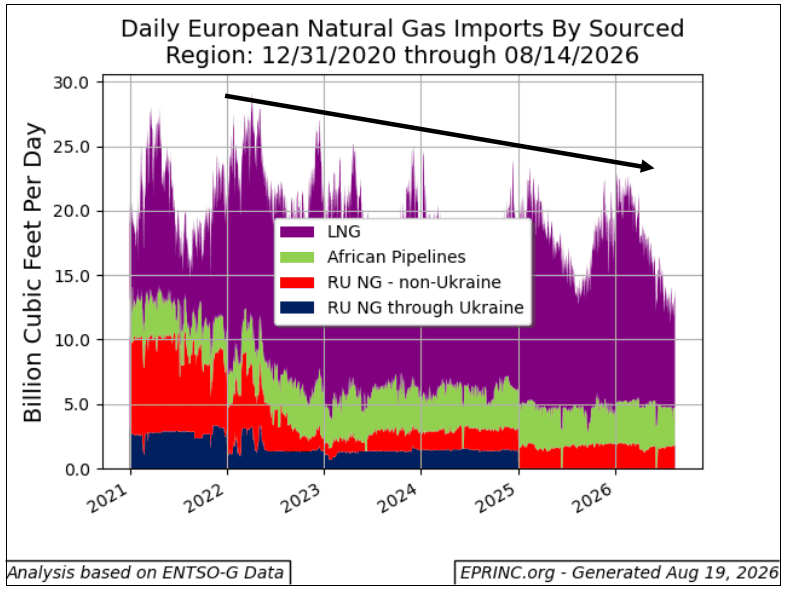
The European Commission has responded by relaxing the mandatory storage target from 90% to 80% for the 2026-27 winter and maintains that supply is not immediately at risk. But reaching even 80% by November would require attracting well over 100 additional LNG cargoes per month through October, a pace market intelligence firms consider unlikely absent a resolution to the Hormuz disruption. A severe winter would test that buffer directly.
Cite: EPRINC, “European Natural Gas Inventories: A Record-Low Buffer Entering Winter,” Chart of the Week 2026-29, August 21, 2026.