
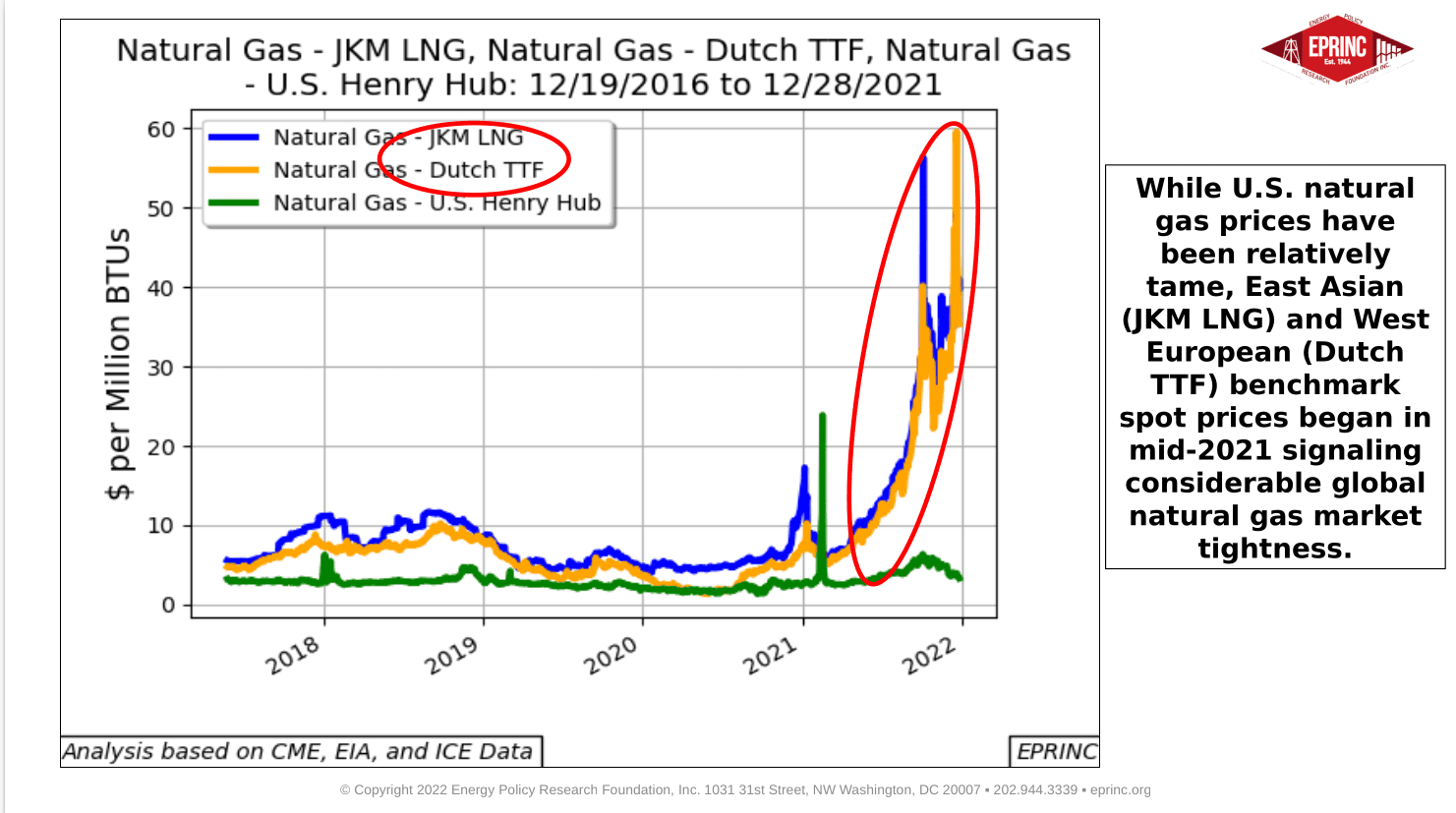
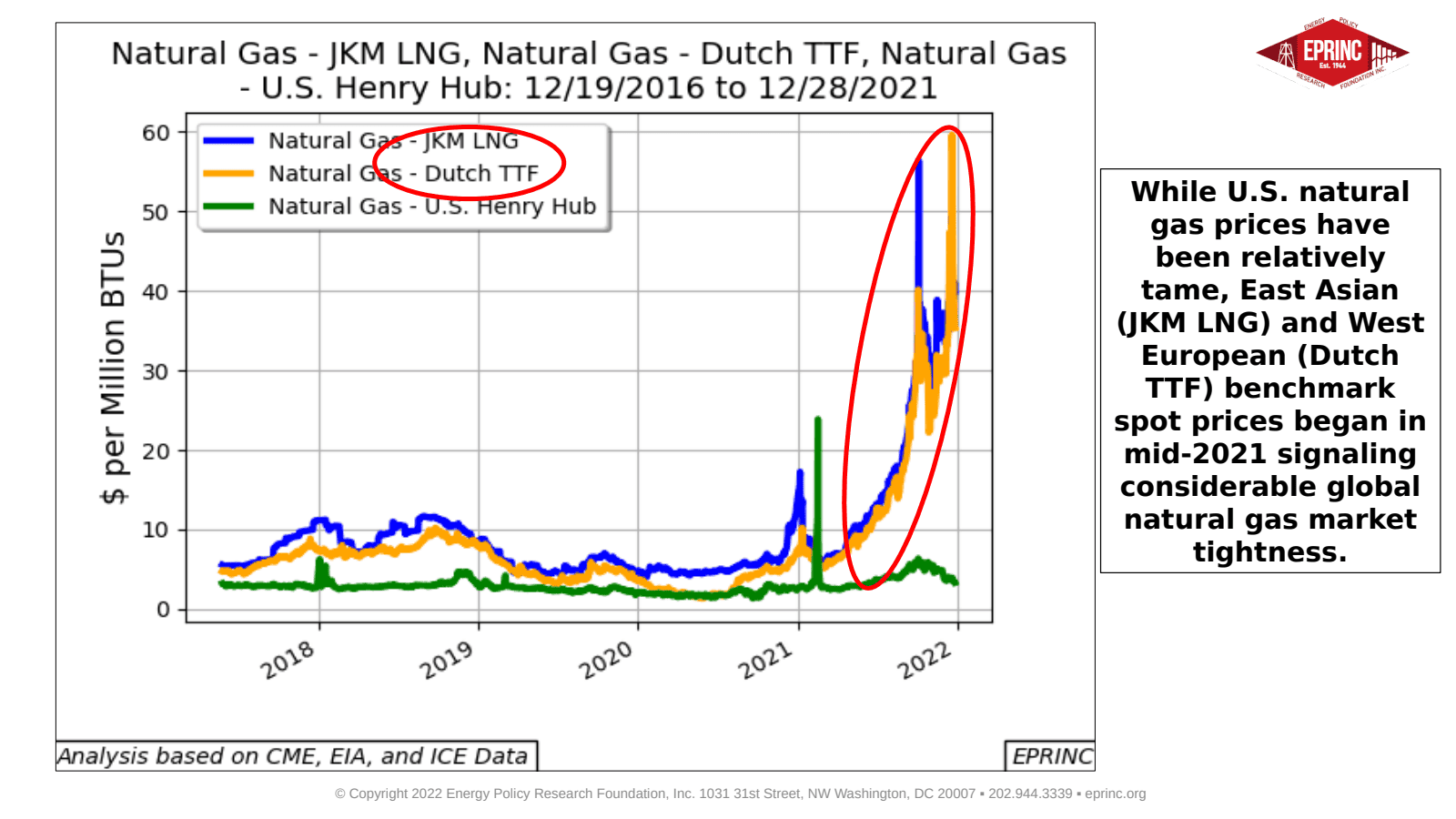
Beginning in mid-2021, global natural gas markets shifted quickly from well-supplied to signaling shortages. Part of this stemmed from a faster-than-expected rebound in global energy demand following the pandemic-induced 2020 collapse, and in some developed European countries policymakers underestimated natural gas requirements ahead of winter heating needs. A further factor tightening global markets was China’s aggressive purchases of LNG.
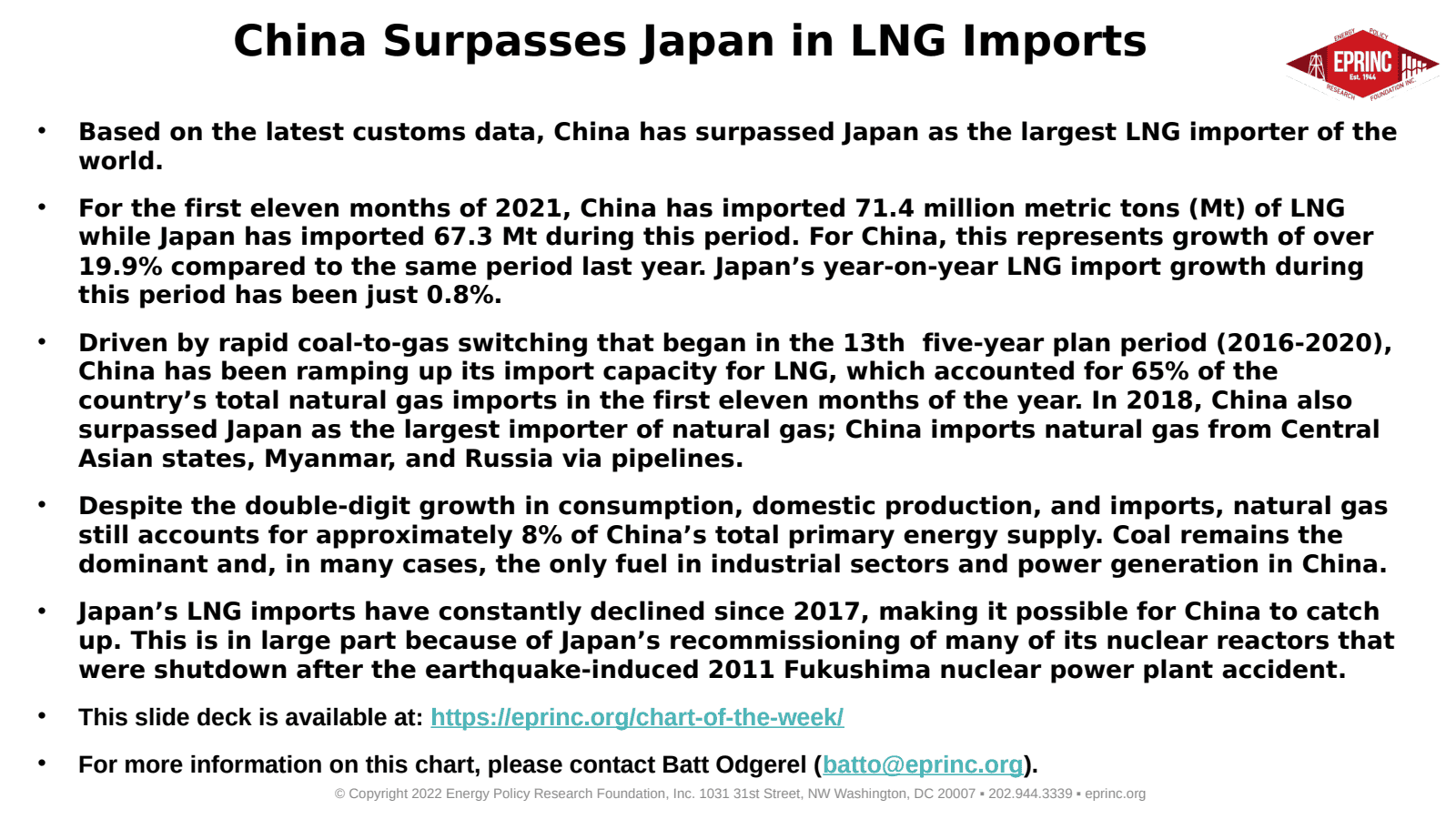
China’s LNG demand growth has been strong enough that it is on track to surpass Japan for 2021. Over the first ten months of the year, China imported 64.5 million metric tons (Mt) of LNG, compared with 61.4 Mt for Japan. Japan has long been dominant in global LNG, consuming between 65 and 90 Mt per year (9 to 12 BCF/d, or 20% to 35% of total global LNG production) over the past decade. Its demand rose further after the 2011 earthquake-induced Fukushima accident led to the shutdown of all of Japan’s nuclear reactors and greater reliance on natural gas-fired power. As safety concerns have abated, many of those plants have been recommissioned, reducing reliance on LNG.
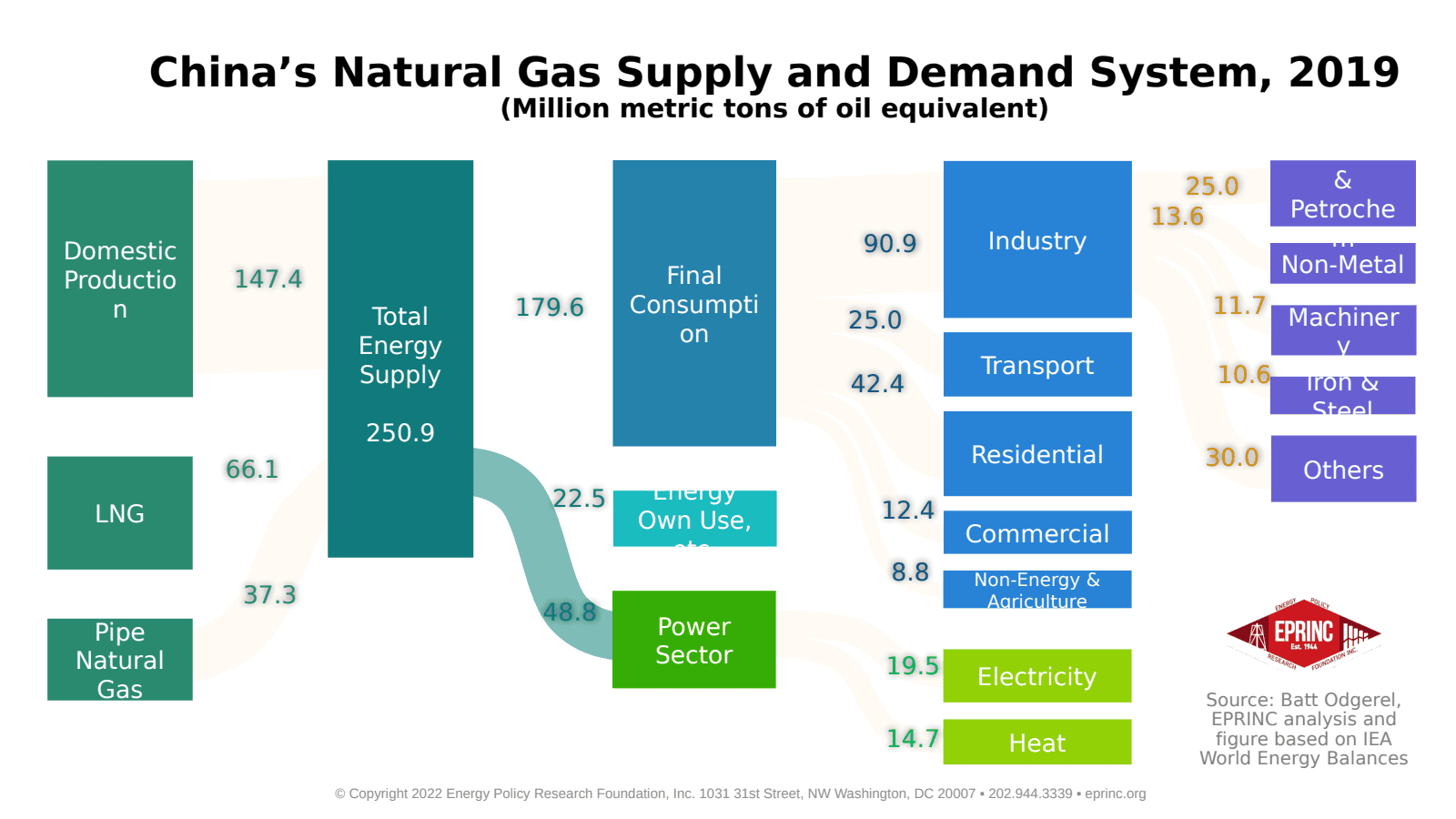
Despite China’s increased natural gas demand, natural gas represents less than 9% of the country’s primary energy demand, compared with 22% for Japan (almost all sourced from LNG) and 34% for the United States. Over 56% of China’s primary energy demand is met by coal, of which China supplies 90%, still requiring imports. Unlike Japan, Korea, and Taiwan, which source their natural gas almost exclusively from LNG, China has some domestic production and imports substantial volumes via pipeline from Turkmenistan (beginning in 2009) and, more recently, from Russia (beginning in December 2019). Chinese pipeline natural gas imports averaged 4.4 BCF/d in 2020.
The China LNG story requires qualification: over the last two years, demand growth has not been fully organic. It has been partly a function of China’s boycott of Australian coal amid a bilateral dispute, effectively resulting in coal-to-gas switching. This rapid rise in Chinese LNG demand has constrained global natural gas supplies, adding to price spikes across major consuming regions in Europe and East Asia.

From the EPRINC Chart of the Week archive.
Cite: EPRINC, “China Surpasses Japan in LNG Imports,” Chart of the Week 2022-01, January 3, 2022.