
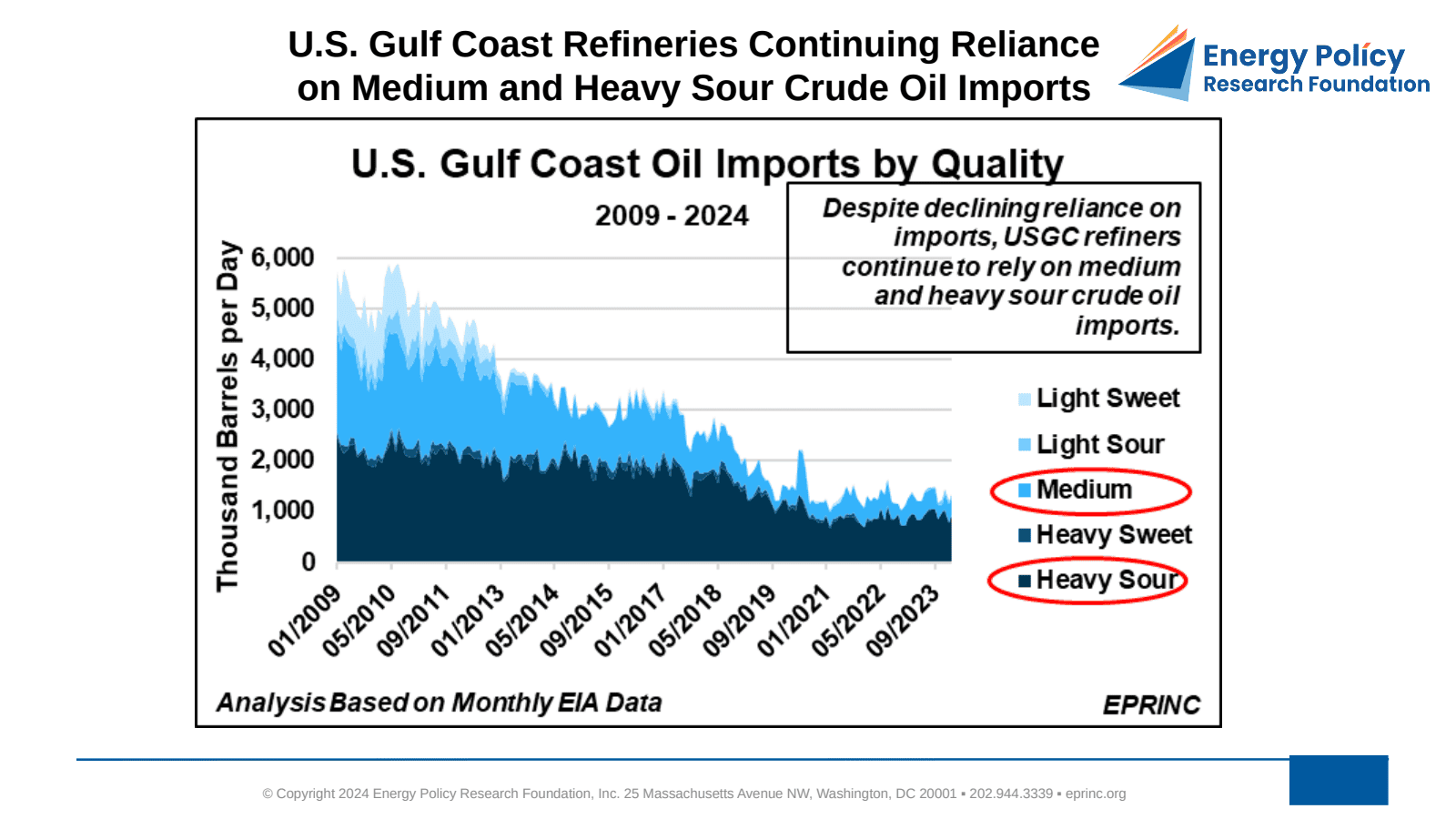
Refineries along the U.S. Gulf Coast (USGC) account for over 9 million barrels per day (mbd), or 55%, of total U.S. refining capacity. While they process a wide slate of crudes, they are commercially optimized to refine medium and heavy sour varieties. The North American shale revolution has produced a bounty of crude oil, but of the light types, so USGC refiners still need to import medium and heavy sour oil.
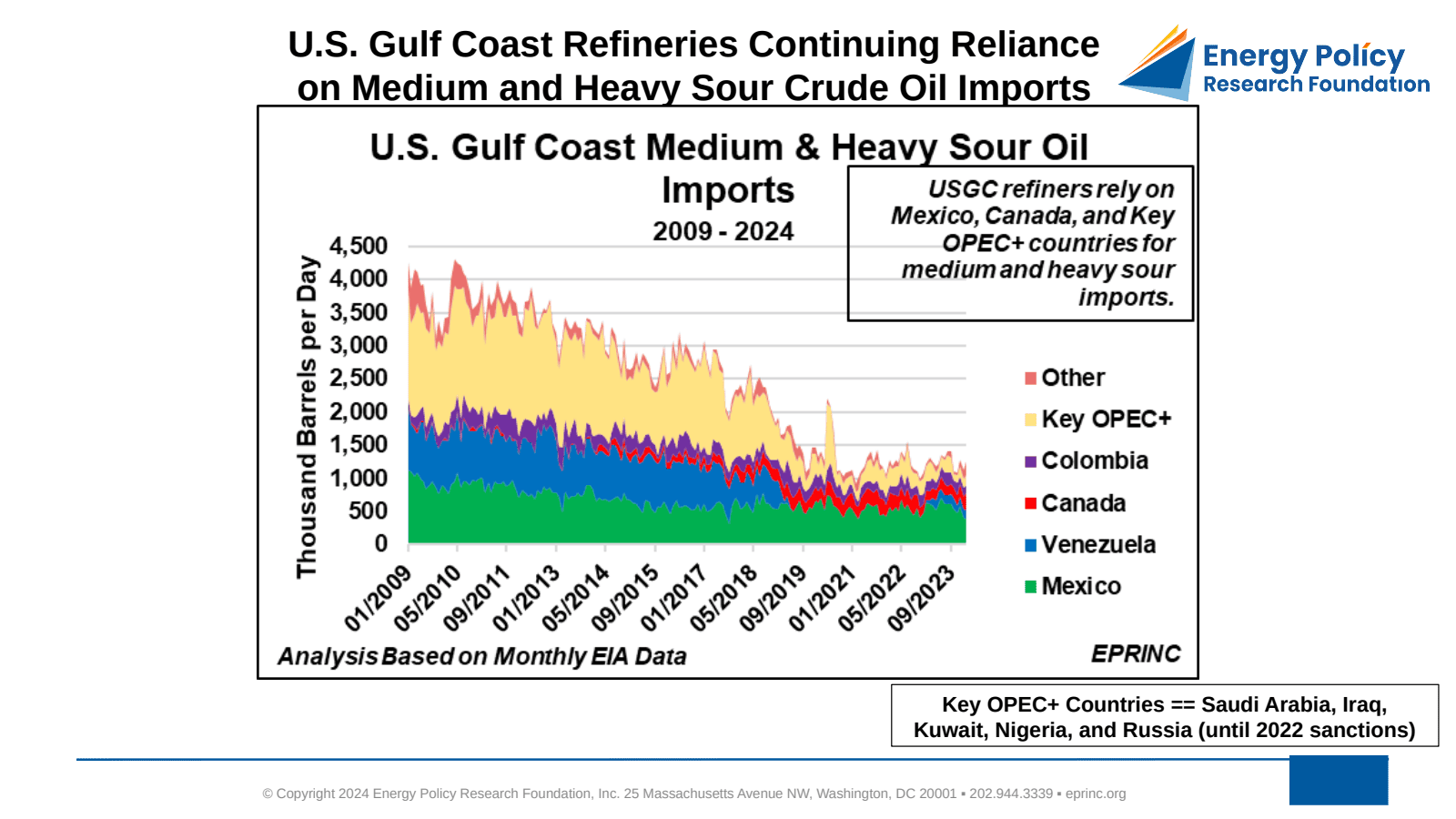
The core medium and heavy sour crude suppliers to the USGC have been Venezuela, Mexico, Canada, and Colombia. To a lesser degree, key OPEC+ countries — Saudi Arabia, Iraq, Nigeria, and Russia (the last before 2022 sanctions) — have also served as a source. However, three of the core suppliers’ imports have been or potentially might be limited:
- Venezuela: Amid increasing human rights abuses and political oppression that have driven 7.7 million refugees from the country, the Trump administration expanded sanctions, driving U.S.-bound Venezuelan exports to zero. Beginning in October 2022, the Biden administration relieved sanctions on the condition that steps toward free and fair elections would be met by April 2024. Some conditions were met, but key ones were incomplete, and sanctions were consequently restored.
- Canada: The newly commissioned Trans Mountain pipeline moves crude from Alberta to coastal British Columbia for tanker export. As a result, less Canadian crude will be available to pipeline to the USGC, and what remains available will be more costly.
- Mexico: Despite delays, Mexico is nearing completion of its 340 thousand barrel per day Olmeca refinery in the Dos Bocas region, which is set to process locally produced heavy crude that would usually be exported to USGC refiners.
Given these limitations from large, proximate exporters, more medium and heavy sour crude would have to be sourced from more distant countries, raising freight costs that would be passed through. OPEC+ countries have signaled that they do not expect to ease production quotas, so their crude availability remains unchanged.
Sensing that transportation fuel prices will be elevated throughout the summer, the Biden administration has instituted several measures, such as the May 21, 2024 announcement of sales from the U.S. Northeast gasoline supply reserve. However, such steps do not appear sufficient to make a significant change in national prices.
From the EPRINC Chart of the Week archive.
Cite: EPRINC, “U.S. Gulf Coast Refineries Continuing Reliance on Medium and Heavy Sour Crude Oil Imports,” Chart of the Week 2024-20, May 13, 2024.