
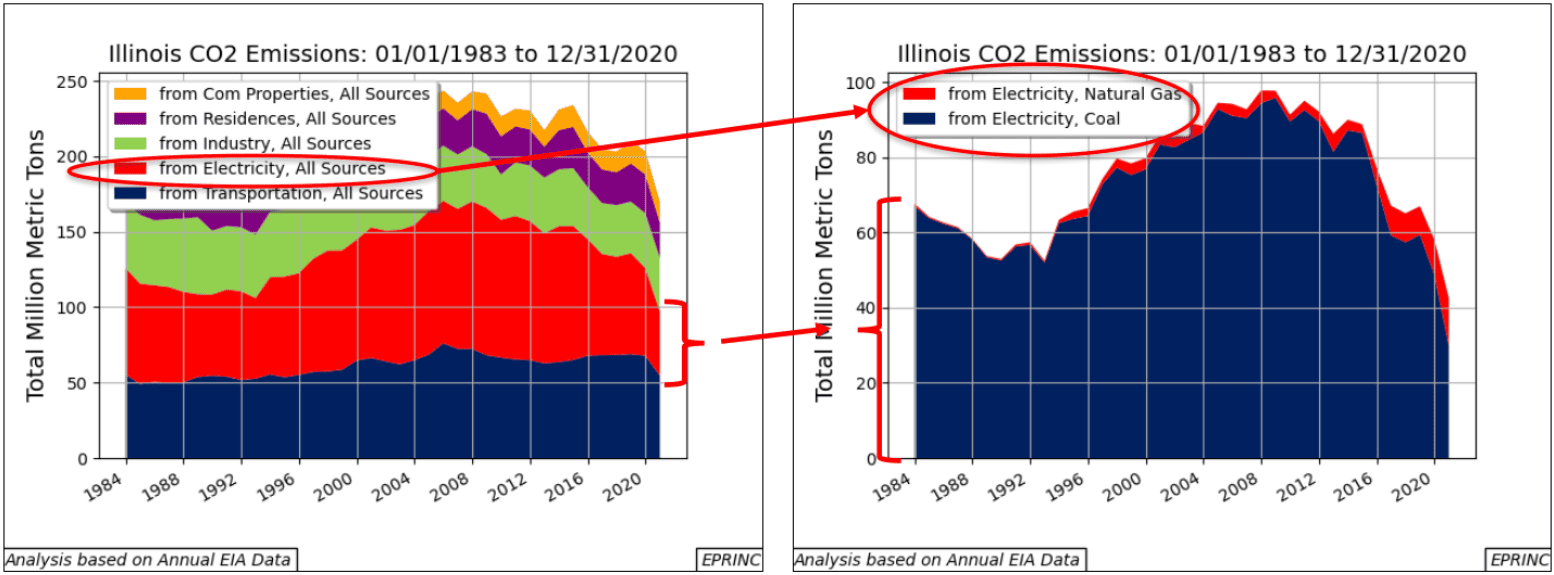
The Illinois Energy Transition Act, signed into law in September 2021, mandates that almost all commercially-owned coal-fired electricity plants eliminate CO2 emissions by 2030 or shut down. Municipally-owned coal-fired plants, commercially-owned natural-gas plants, and several recently commissioned coal-fired plants named in the Act have until 2045 to comply.
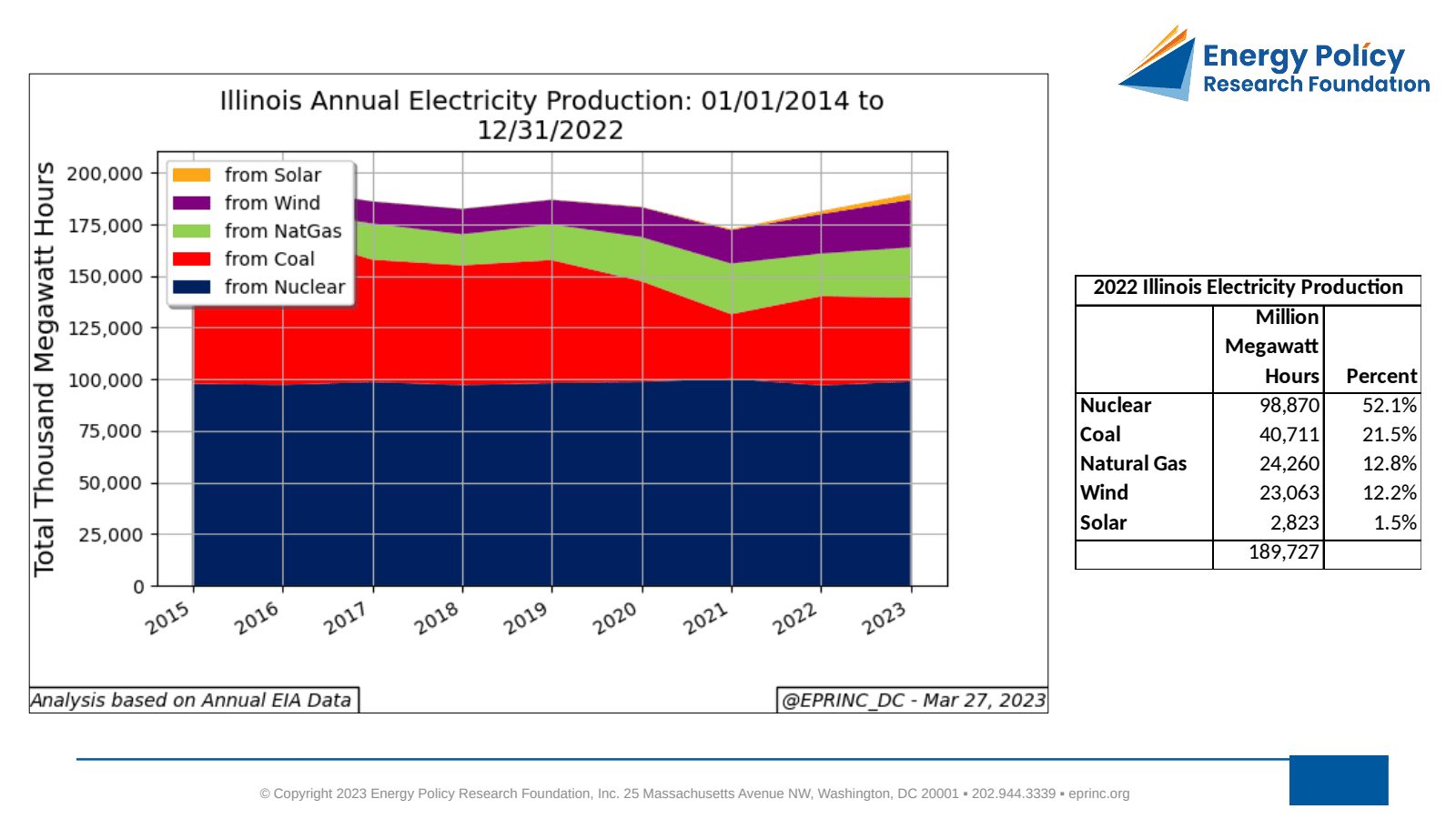
In 2022, Illinois generated 190 million megawatt hours of electricity. Emissions-producing coal and natural gas accounted for 21.5% and 12.8% of total generation, respectively. Since 2014, coal generation has fallen from 43.5% of the total while natural gas has risen from 5.1%. Over the same period, emissions-free nuclear generation ranged between 48% and 52%, while combined solar and wind generation grew from 5.1% to 13.6%.
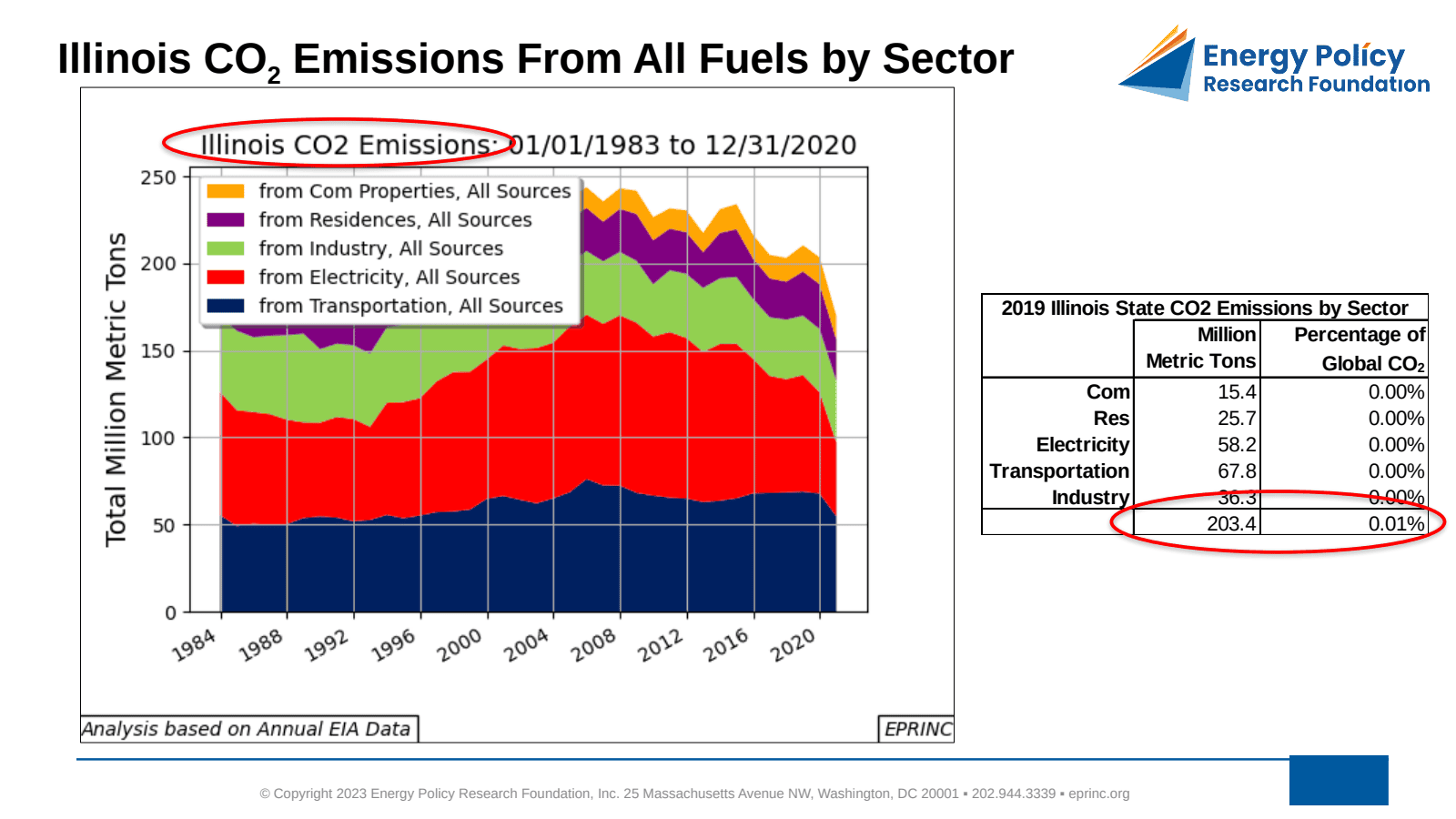
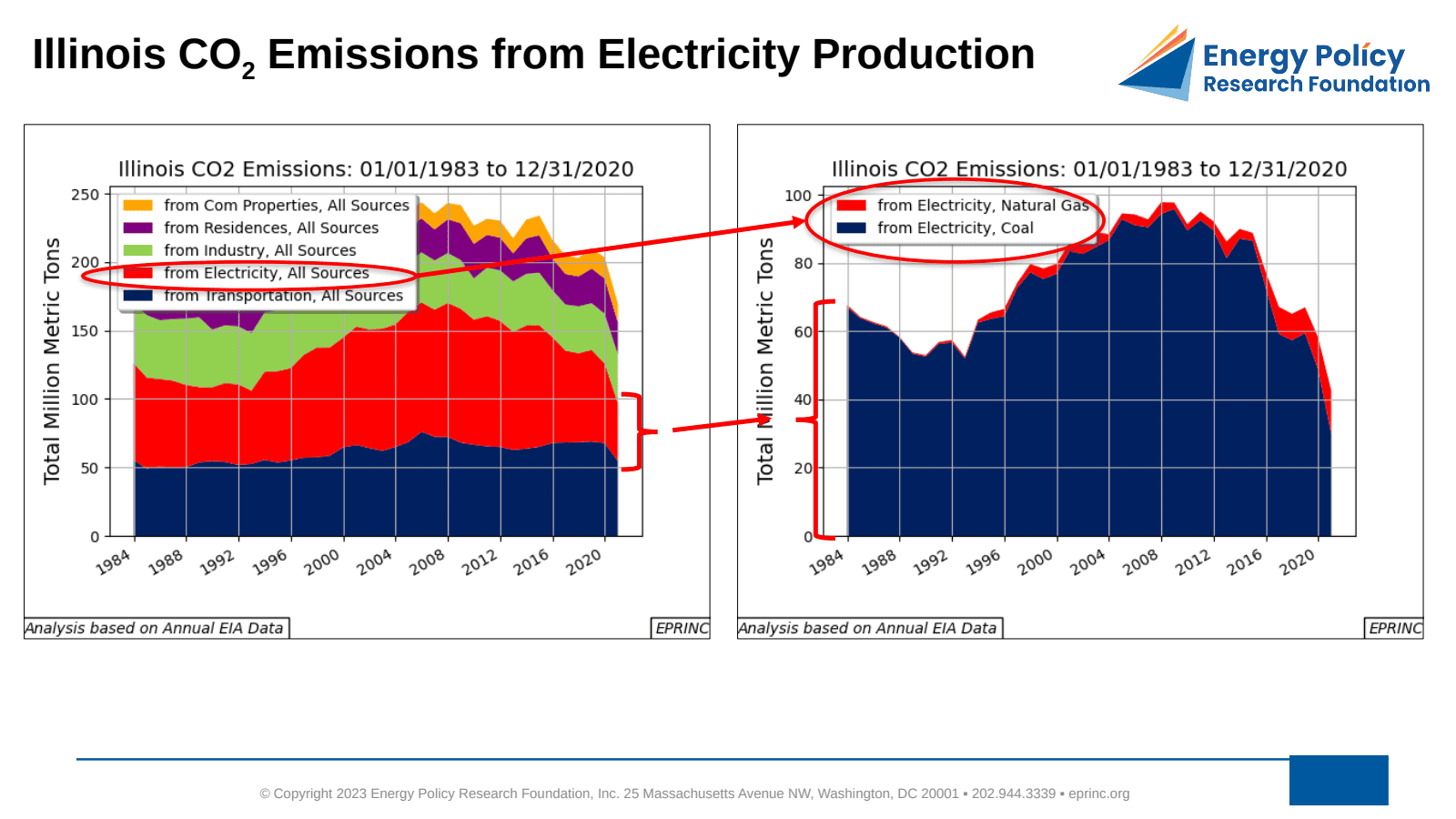
The chart places Illinois’ emissions in a broader context. Global CO2 emissions from hydrocarbon fuel use total 36.4 billion metric tons per year, of which roughly 45%, or 16.4 billion tons, remains in the atmosphere. U.S. emissions are 5.2 billion metric tons, or 14% of the global total. In 2019, Illinois emissions from fuel combustion were 203.4 million metric tons—3.9% of the U.S. total and 0.55% of the global total. Of this, electricity generation emitted 58.2 million tons, or 1.1% of the U.S. and 0.15% of the global total, primarily from coal.
Against these proportions, the Illinois Energy Transition Act seeks to influence global CO2 emissions through actions confined to a relatively small jurisdiction and emissions profile—an approach costly to Illinois with little prospect of measurable impact on the U.S. or global total.

From the EPRINC Chart of the Week archive.
Cite: EPRINC, “Illinois CO2 Emissions From Electricity Production,” Chart of the Week 2023-13, March 27, 2023.