
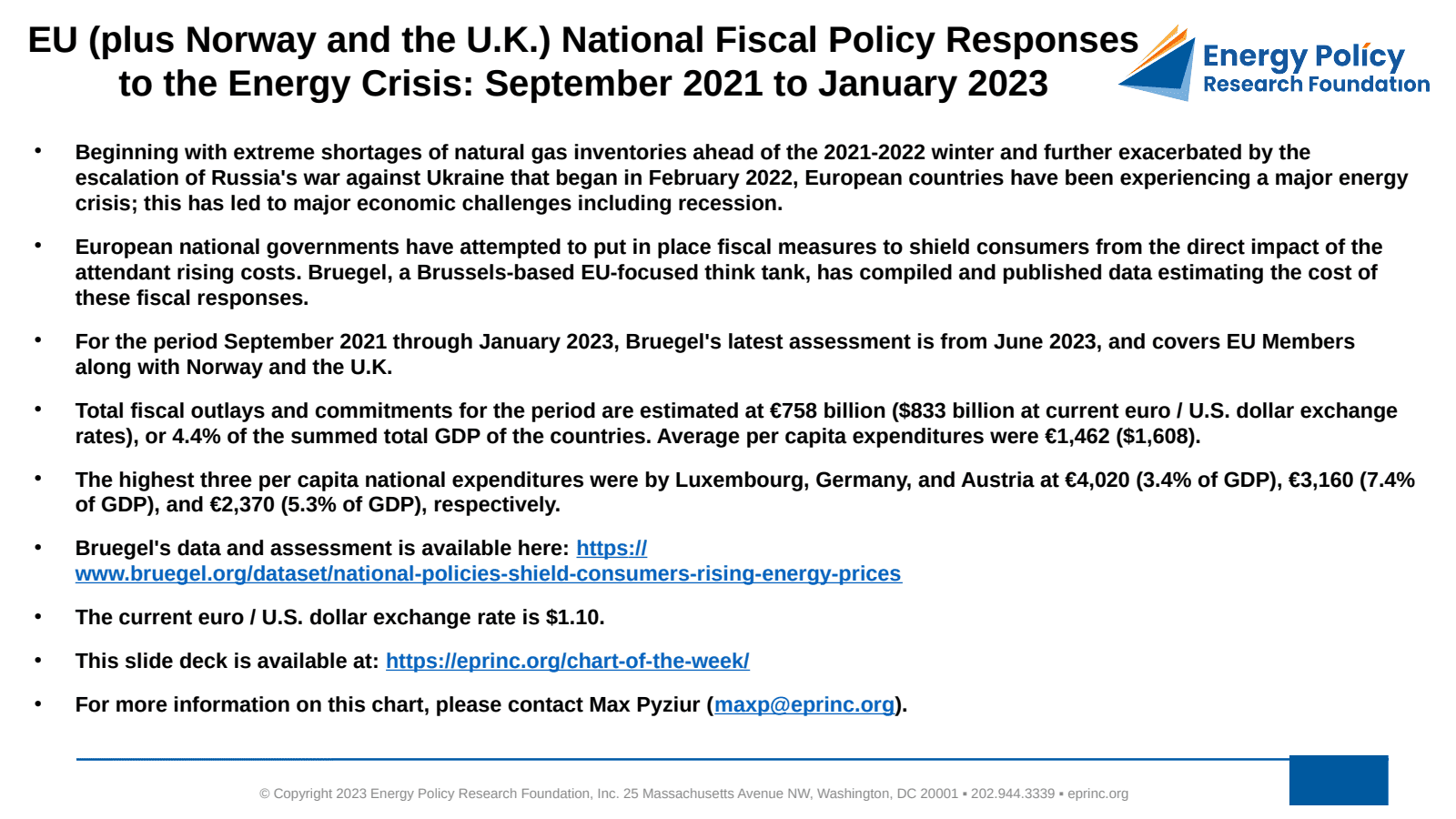
Beginning with acute shortages of natural gas inventories ahead of the 2021–2022 winter and further intensified by the escalation of Russia’s war against Ukraine in February 2022, European countries have faced a major energy crisis that produced significant economic challenges, including recession. In response, national governments introduced fiscal measures intended to shield consumers from the direct impact of rising costs.
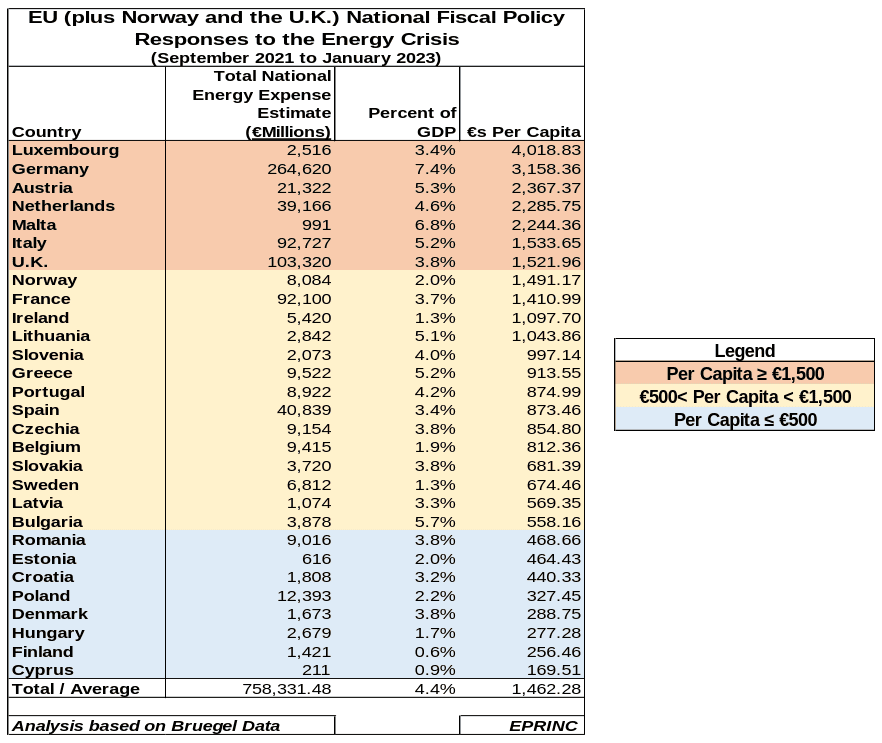
This chart draws on data compiled by Bruegel, a Brussels-based EU-focused think tank, whose June 2023 assessment estimates the cost of these responses across EU members plus Norway and the U.K. for the period September 2021 through January 2023.
Total fiscal outlays and commitments for the period are estimated at €758 billion ($833 billion at current exchange rates), or 4.4% of the summed GDP of the countries covered. Average per capita expenditures were €1,462 ($1,608).
The three highest per capita national expenditures were by Luxembourg, Germany, and Austria, at €4,020 (3.4% of GDP), €3,160 (7.4% of GDP), and €2,370 (5.3% of GDP), respectively. Dollar conversions reflect a euro / U.S. dollar exchange rate of $1.10.
From the EPRINC Chart of the Week archive.
Cite: EPRINC, “EU (plus Norway and the U.K.) National Fiscal Policy Responses to the Energy Crisis: September 2021 to January 2023,” Chart of the Week 2023-27, July 3, 2023.