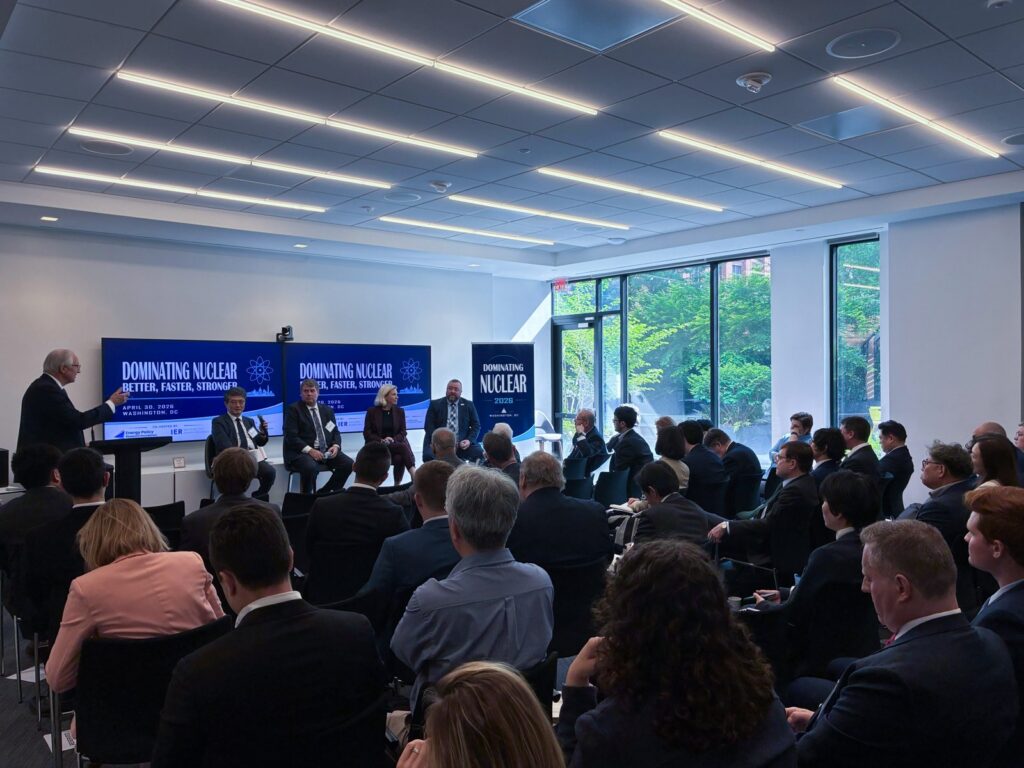
On April 30, the Energy Policy Research Foundation (EPRINC) and the Institute for Energy Research (IER) convened Dominating Nuclear: Better, Faster, Stronger, a full-day workshop on what it will take to move US nuclear energy from ambition to reality. The event was supported by the KEPCO International Nuclear Graduate School (KINGS), whose participation brought a critical international perspective to the timely discussion.
EPRINC President Lucian Pugliaresi and IER President Thomas Pyle opened by framing the stakes. Demand growth, driven substantially by AI and data center buildout, has made reliable baseload power a national priority, and after years of talk about a nuclear “renaissance,” there is now real recognition that nuclear has to be part of the answer. The goal for the day, Pugliaresi noted, was to get granular: not to restate the case for nuclear in broad terms, but to work through the specific obstacles between where the industry is today and where it needs to be.
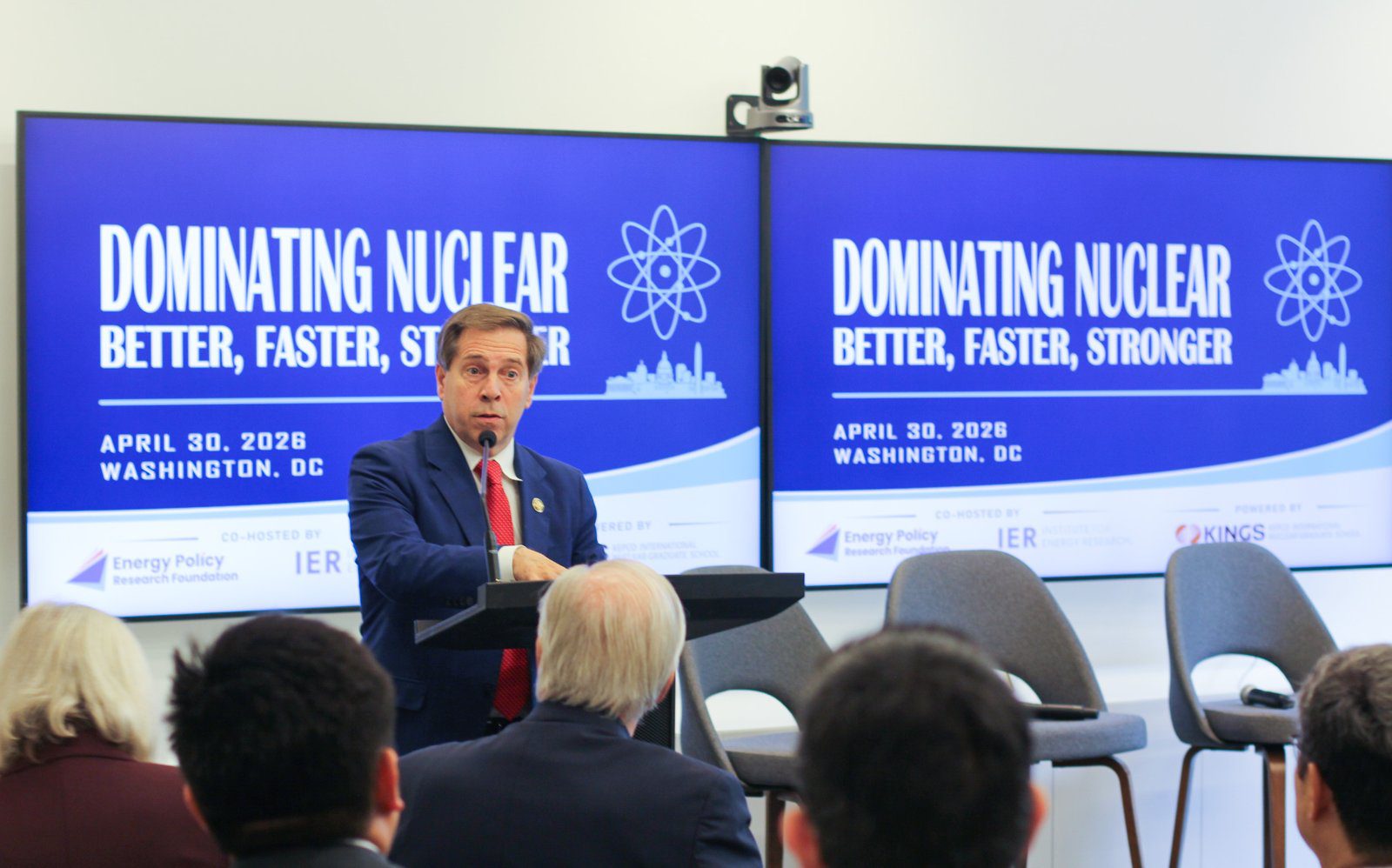
Congressman Chuck Fleischmann (R-TN-3), who chairs the House Energy and Water Development Appropriations Subcommittee, delivered the morning keynote with a candid account of the appropriations picture. He described nuclear as one of the real areas of bipartisan common ground in Washington, DC, pointing to the congressional nuclear caucuses and to a generational shift in attitudes.
Fleischmann was direct about priorities: the United States needs fuel, workforce, and the right designs, all at once. He recalled his surprise, on arriving in Congress, at learning that the country of the Manhattan Project was no longer enriching uranium domestically, and pointed to appropriations aimed at rebuilding that capacity, including centrifuge manufacturing in Oak Ridge and Ohio. He was bullish on Generation IV designs while noting their dependence on HALEU, and emphasized restarting previously shuttered plants as a near-term source of capacity. Throughout, he returned to a theme that ran through the day: America’s international partners are essential, not incidental, to this effort.
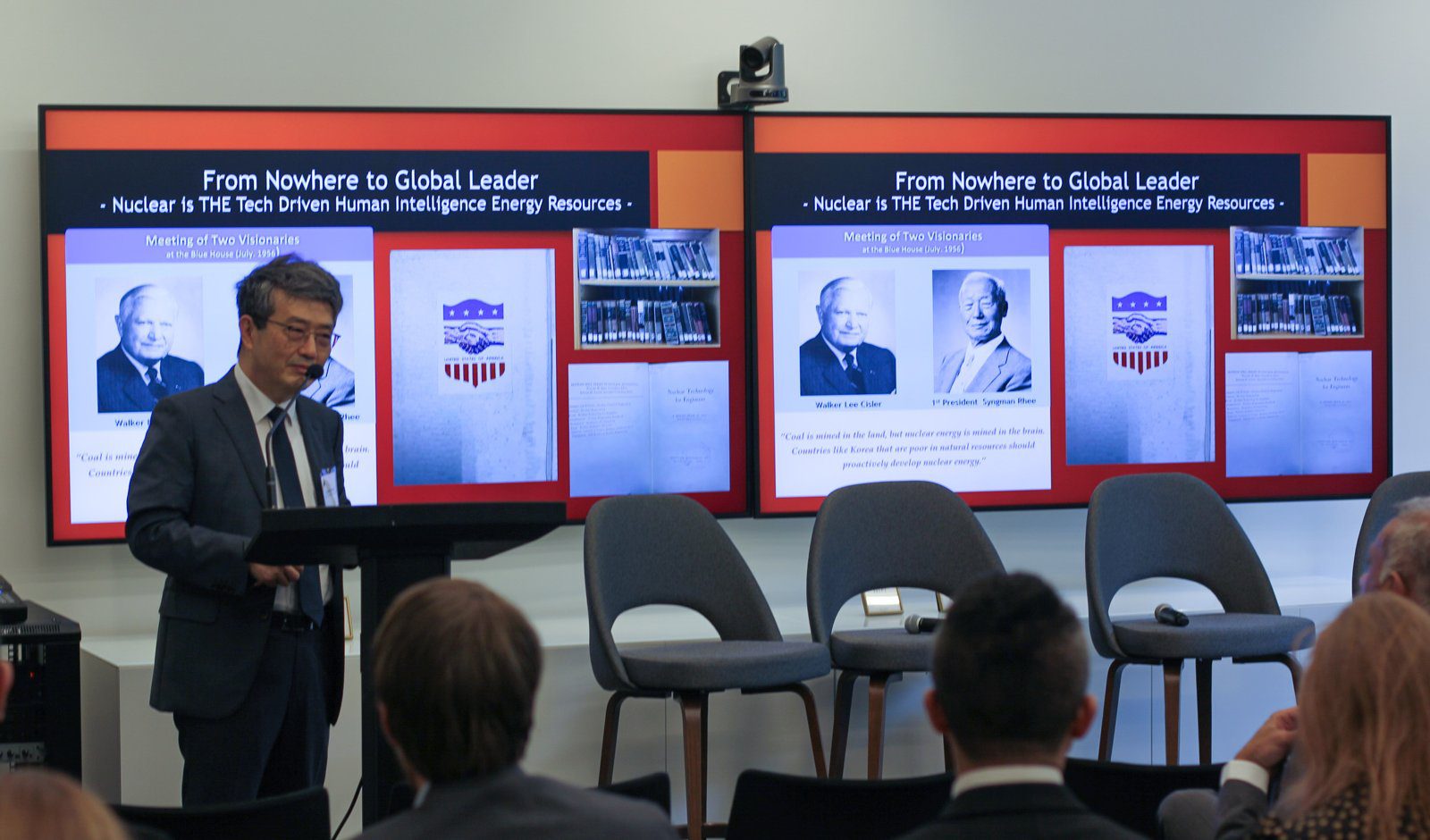
Dr. Yongsoo Hwang, Distinguished Professor at KINGS, opened Panel One drawing on South Korea’s experience building a nuclear industry from essentially nothing. His central argument was that construction schedule is cost: delay compounds financing uncertainty and drives project price far more than most people appreciate, making shorter timelines and rigorous EPC execution and standardization the industry’s key variable. No one country can solve this alone, and therefore there needs to be a division of labor among allies: the US and France in finance and technology, the UK in nuclear expertise, Korea in construction and manufacturing, and Japan in components. Absent that cooperation, Western suppliers will not match Chinese and Russian vendors on price or delivery in third-country markets. He was equally clear that the answer is not more subsidy: real market discipline and real value for money are what will persuade the industrial and data center customers now entering the market to sign contracts.
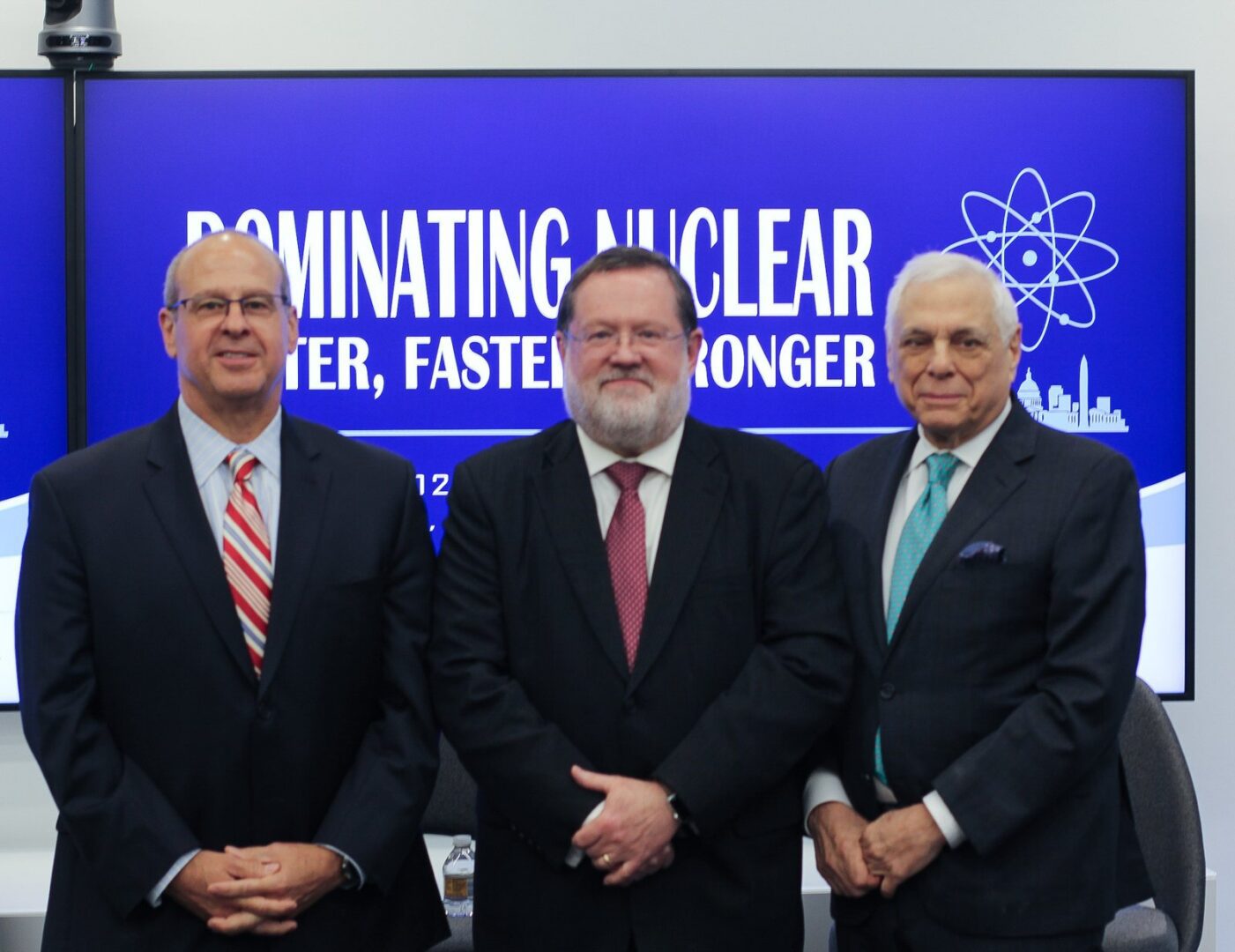
Dr. Michael Goff, Principal Deputy Assistant Secretary in DOE’s Office of Nuclear Energy, joined Thomas Pyle for the luncheon keynote conversation, addressing the Department’s role in supporting deployment, fuel availability, and the pathway from demonstration to commercial operation.
Panel Two examined the fuel supply with speakers from the French Embassy, Centrus Energy, URENCO, and IsoEnergy, covering uranium production shortfalls, enrichment capacity, HALEU, and closed fuel cycle strategies. Panel Three turned to the demand signal, bringing together the Nuclear Energy Institute, the Embassy of Finland, NVIDIA, Japan’s METI, and Google on utilities, data centers, and the investment case for new build.
EPRINC thanks KINGS for its support, and all of our speakers and participants for a substantive and unusually frank day of discussion.
Workshop materials
The following materials from the workshop are available for download: