
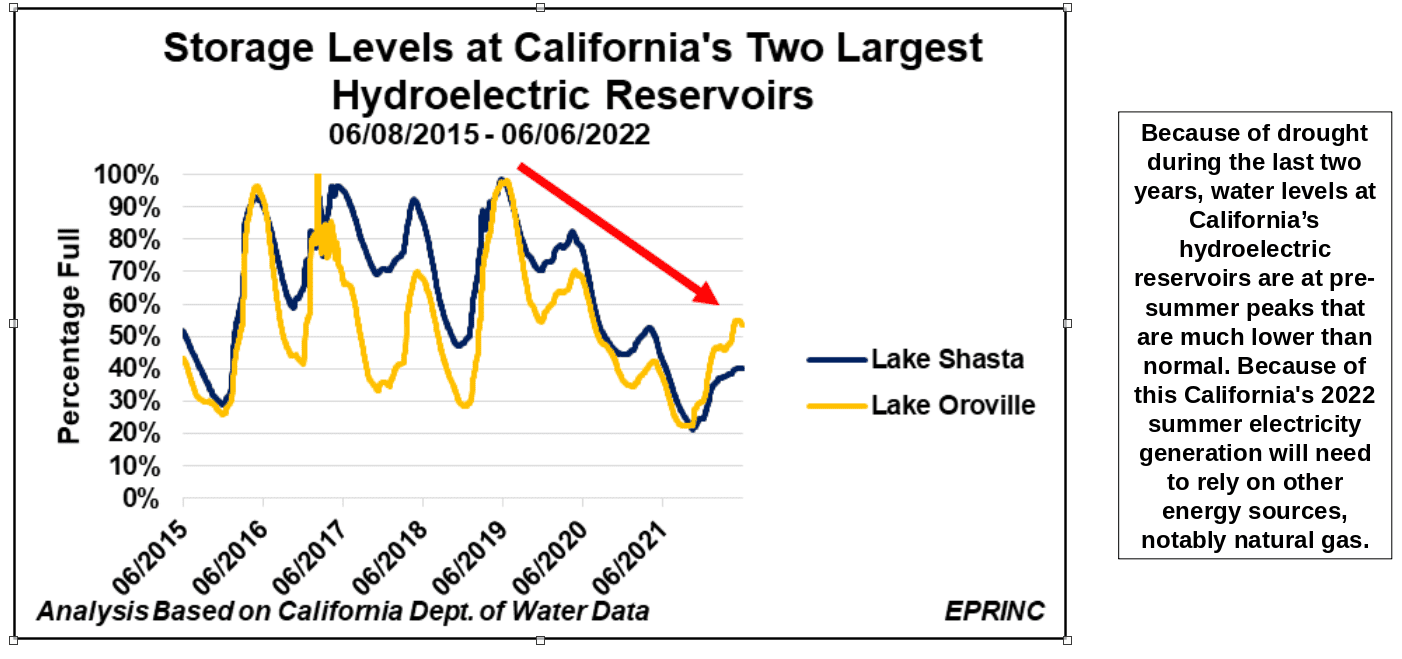
Following two years of drought, water levels at California’s principal hydroelectric reservoirs are entering the summer at pre-peak levels well below normal. As a result, California’s 2022 summer electricity generation is expected to depend more heavily on other energy sources, notably natural gas.
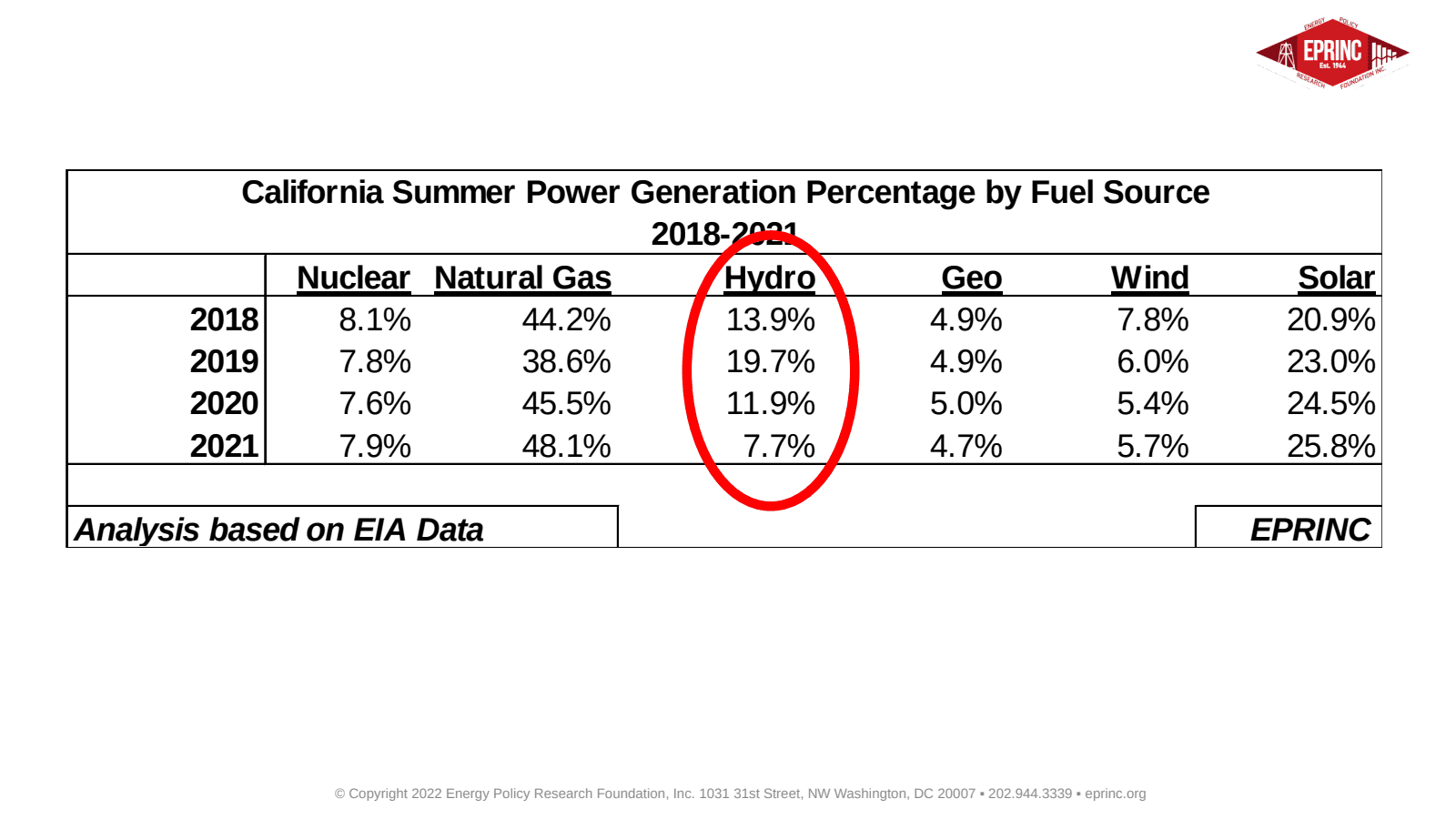
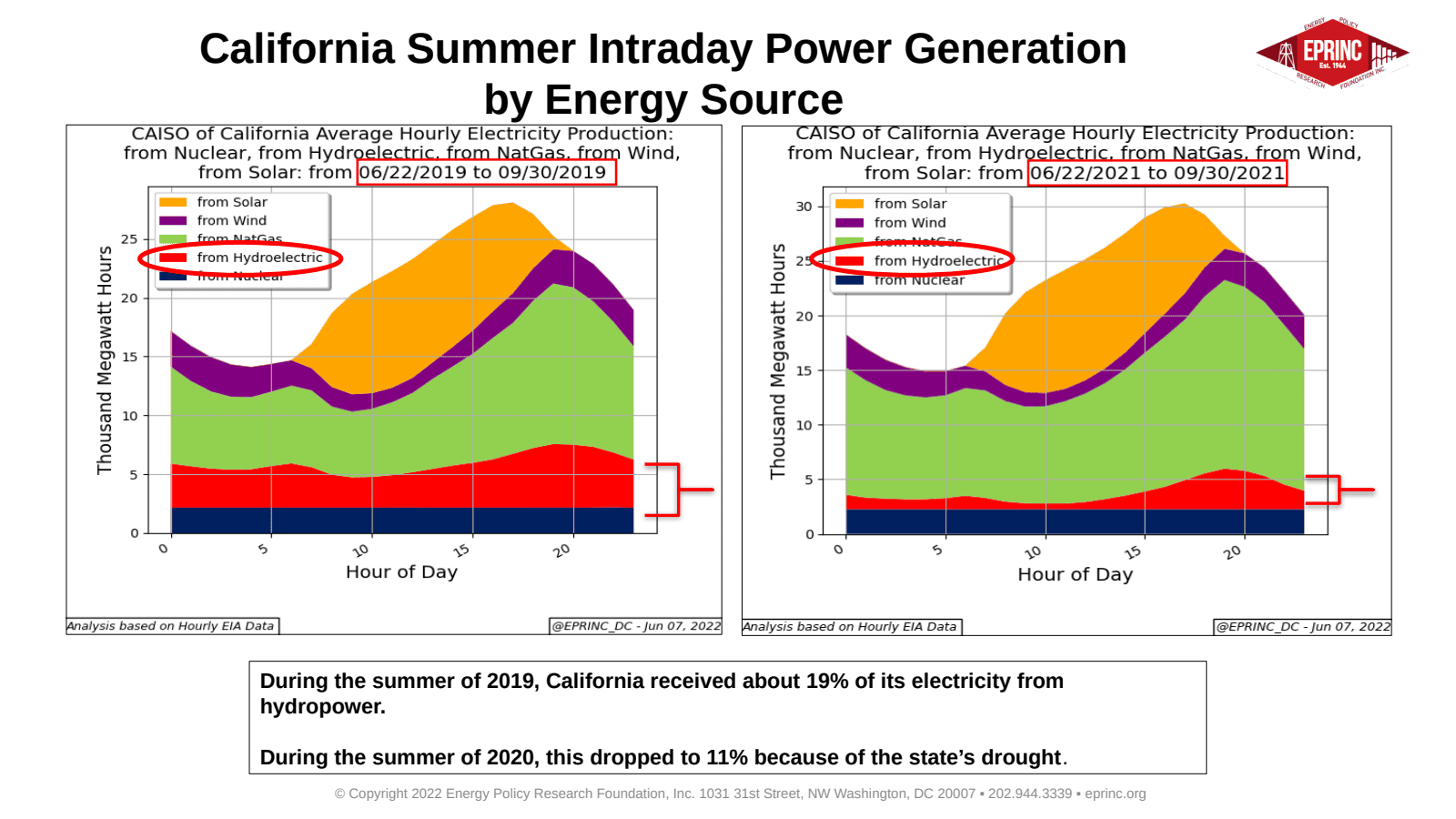
- California has 10,000 Megawatts of installed hydroelectric capacity. Its utilization is highly dependent on water levels at California’s reservoirs, which are critical for summer peak generation.
- On most summer days, California utilizes about half of this capacity. During normal summer conditions, about 15% of California’s electricity is generated from these sources.
- Ahead of the 2022 summer and beginning two years ago, California has been experiencing a severe drought; this has caused water levels across all California’s hydroelectric reservoirs to drop considerably.
- Lake Shasta and Lake Oroville, California’s two largest hydroelectric reservoirs, are currently at 40% and 54% of their capacity, respectively, rather than 90% under normal circumstances.
- To make up for the shortfall, California is expected to increase its reliance on electricity from natural gas generation, rising from an average of 45% of total to over 50%.
From the EPRINC Chart of the Week archive.
Cite: EPRINC, “California Summer Hydroelectric Power Shortfall is Projected,” Chart of the Week 2022-20, May 16, 2022.