
In its current form, gasoline is a blend of several components, most of which are derived from crude oil; the remaining balance is from agricultural sources. Its mixture is calibrated to adhere to specific operational, climatic, and regulatory standards.
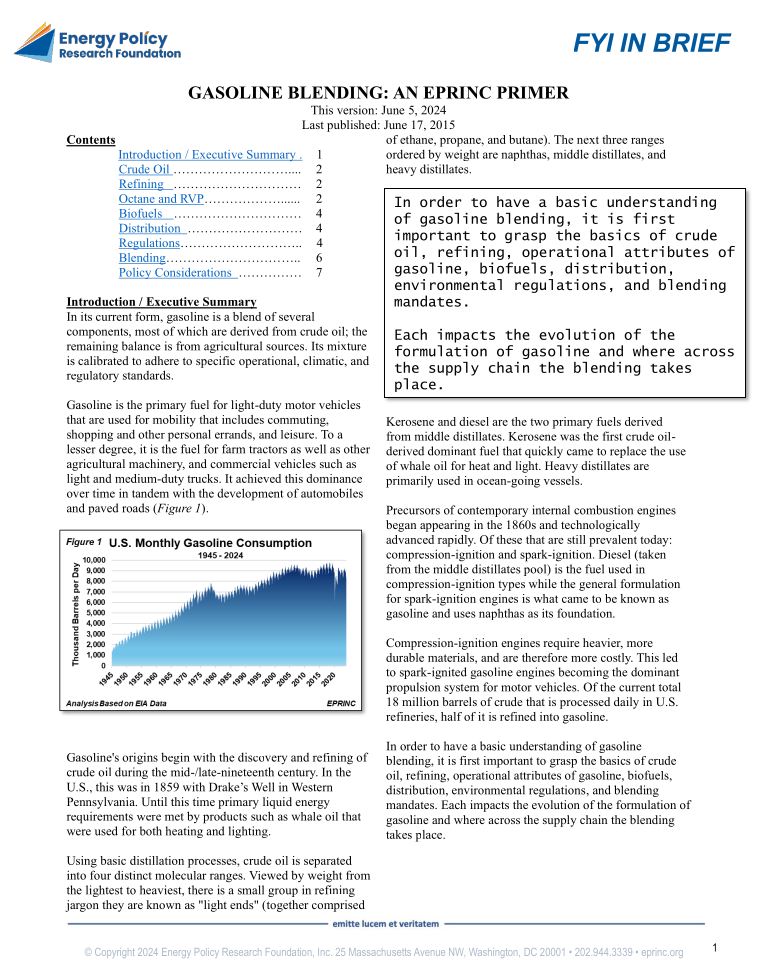
Gasoline is the primary fuel for light-duty motor vehicles that are used for mobility that includes commuting, shopping and other personal errands, and leisure. To a lesser degree, it is the fuel for farm tractors as well as other agricultural machinery, and commercial vehicles such as light and medium-duty trucks. It achieved this dominance over time in tandem with the development of automobiles and paved roads (Figure 1).
Gasoline’s origins begin with the discovery and refining of crude oil during the mid-/late-nineteenth century. In the U.S., this was in 1859 with Drake’s Well in Western Pennsylvania. Until this time primary liquid energy requirements were met by products such as whale oil that were used for both heating and lighting.
Using basic distillation processes, crude oil is separated into four distinct molecular ranges. Viewed by weight from the lightest to heaviest, there is a small group in refining jargon they are known as “light ends” (together comprised of ethane, propane, and butane). The next three ranges ordered by weight are naphthas, middle distillates, and heavy distillates.