
Biodiesel is a biofuel produced through a process known as transesterification. A range of vegetable oil feedstocks can be used, including waste cooking oil, but the dominant feedstock is soybean oil. Rather than being sold as B100, biodiesel is typically blended with petroleum diesel in concentrations ranging from 5% to 20% (B5 to B20) and is used in the same heating and transportation applications as petroleum diesel.
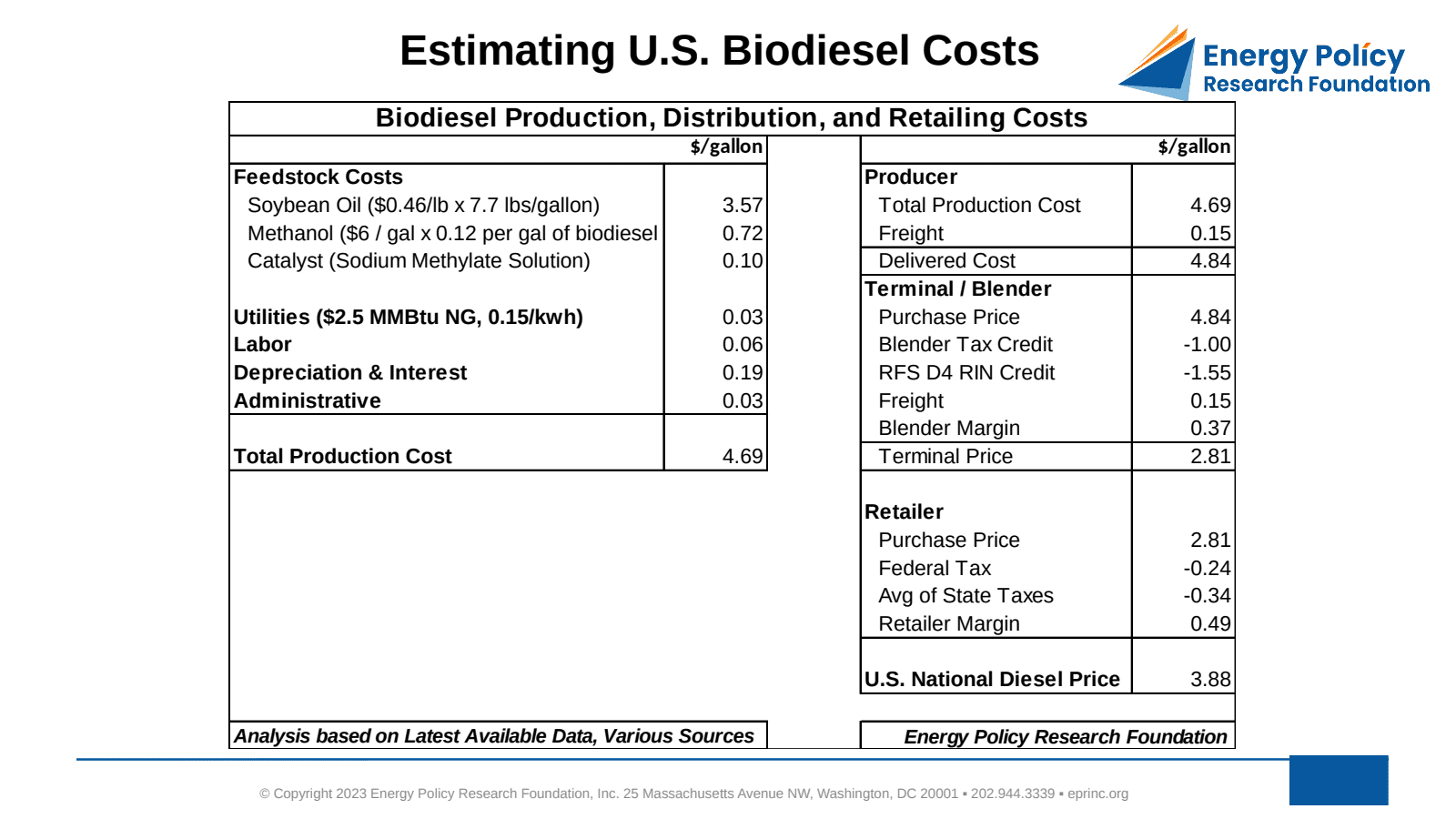
Production, distribution, and retailing cost estimates are subject to wide-ranging factors, including plant size and feedstock cost variability. Using the latest available data, a typical gallon of biodiesel costs almost $4.70 to produce commercially, compared with a current national average retail diesel pump price of $3.88.
Two federal programs are critical to biodiesel’s commercial viability: the Biodiesel Tax Credit (BTC) and the Renewable Fuels Standard (RFS). The BTC was enacted in 2004 under the American Jobs Creation Act. Because the 2004 law carried an expiration provision, the credit has been extended five times since 2011, in some cases retroactively. Since enactment it has been set at $1.00 per gallon, and because feedstock costs are higher for biodiesel than for petroleum diesel, it is offered to blenders and terminal operators.
The RFS, first passed in 2005 and enhanced in 2007, mandates increasing percentages of biofuels, including biodiesel, with EPA required by statute to set the mandates annually. Blending is verified through the acquisition and submission of D4 RIN (renewable identification number) credits; where direct blending falls short, these credits can be purchased in RIN markets.
D4 RIN prices are highly variable. Since early 2021 they have ranged between $1.30 and $2.00 per gallon, giving blenders a means of improving their margins. By comparison, from 2017 through the end of 2020, D4 credits traded below $1.00 and at times as low as $0.50 per gallon.
From the EPRINC Chart of the Week archive.
Cite: EPRINC, “Estimating U.S. Biodiesel Costs,” Chart of the Week 2023-22, May 29, 2023.