
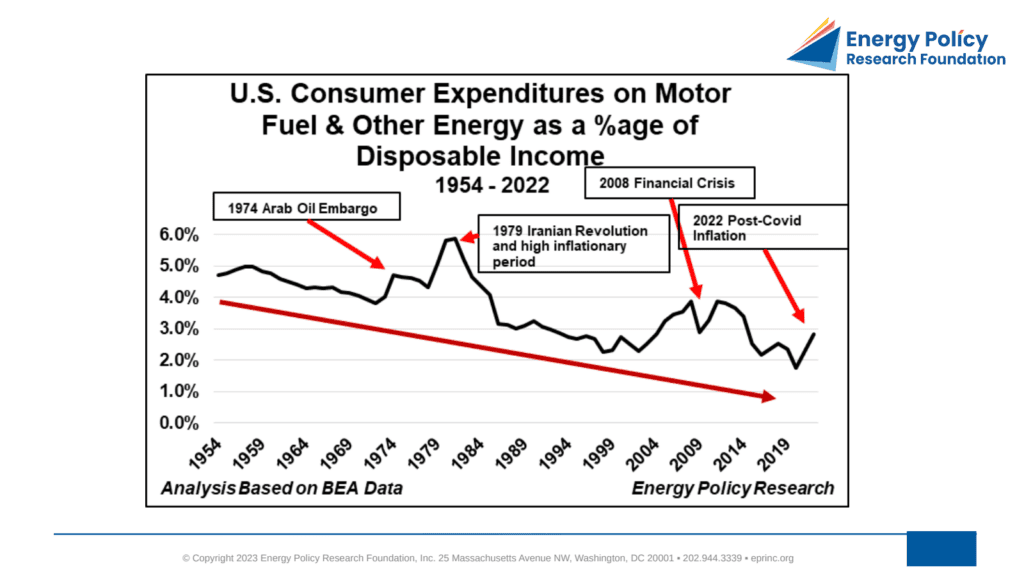
Energy security is commonly described across three dimensions: availability, affordability, and acceptability. Affordability can be further divided into domestic and import prices. One way to measure it is to divide consumer expenditures on motor vehicle fuel and other energy goods by total disposable personal expenditures, yielding a percentage that can be tracked over time.
Using inflation-adjusted data from the U.S. Bureau of Economic Analysis, this measure shows an overall declining trend since the mid-1950s, falling from approximately 5% to roughly 2%. The long-run direction points toward improving affordability, but the series is not smooth.
Periodic spikes interrupt the decline. These have been driven by factors such as foreign supply shocks, including the events of the mid- to late-1970s, compounded by domestic economic challenges such as high inflation and recessions.
Policy interventions have sought to mitigate these adverse episodes. Not all have produced measurable success, and some have proven controversial.

From the EPRINC Chart of the Week archive.