
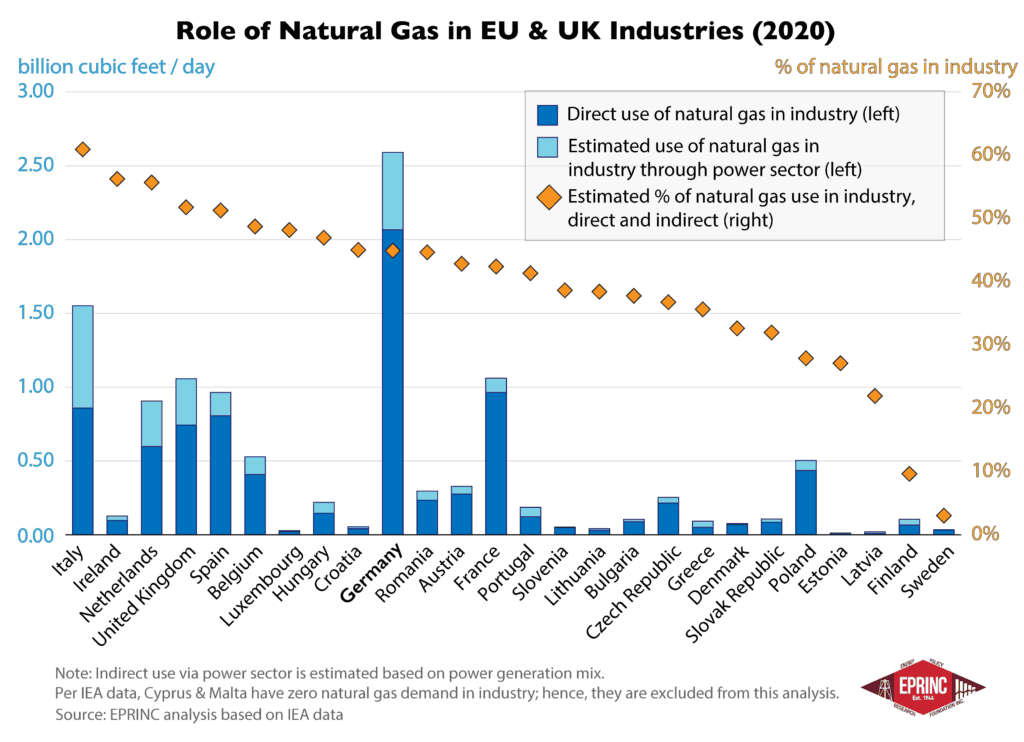
Natural gas plays a central role in the EU’s industrial sector, both as a direct energy input and indirectly across manufacturing processes. The competitiveness of European industry is therefore closely tied to the availability and cost of natural gas.

Key Points:
- Industry plays an outsized role in the economic growth and competitiveness of the European Union, and accounts for a quarter of its GDP (around 18% in UK).
- Natural gas is a key enabler of various industrial applications, from manufacturing to construction, and acts as the largest fuel source of industry in many European countries. As of 2020, the combined onsite and indirect (electricity generation) use of natural gas accounted for a third (32%) of industrial energy demand in the EU plus UK.
- As a feedstock, natural gas also plays a crucial role in chemical production in the EU. In 2020, 25% (or 2.13 billion cubic feet per day) of the region’s industrial natural gas demand (excl. for power generation) went to the chemical and petrochemical sector.
- A shortage of natural gas has a huge adverse impact on the EU’s industrial competitiveness and economic well-being. In fact, the surging gas prices have started affecting European heavy industry companies like the chemicals group BASF as noted in some recent reports (for reference: a Reuters article, a Chemistry World article).
From the EPRINC Chart of the Week archive.