
This week’s chart illustrates the reduction in U.S. motor vehicle emissions over nearly five decades by comparing two versions of the same iconic car: the Ford Mustang. The 1968 Mustang GT fastback, made famous by Steve McQueen in the film Bullitt, serves as a benchmark against its 2016 counterpart.
Measured in pounds of criteria pollutants emitted per 100,000 miles, the 1968 Mustang produced between 1,500 pounds and one ton, while the 2016 model produced just 10 to 20 pounds. Calculations for each model year were based on official EPA data.
Criteria pollutants are the six substances for which the Clean Air Act requires EPA to set National Ambient Air Quality Standards, defining maximum allowable concentrations in outdoor air. They are carbon monoxide, lead, ground-level ozone, nitrogen dioxide, particulate matter, and sulfur dioxide.
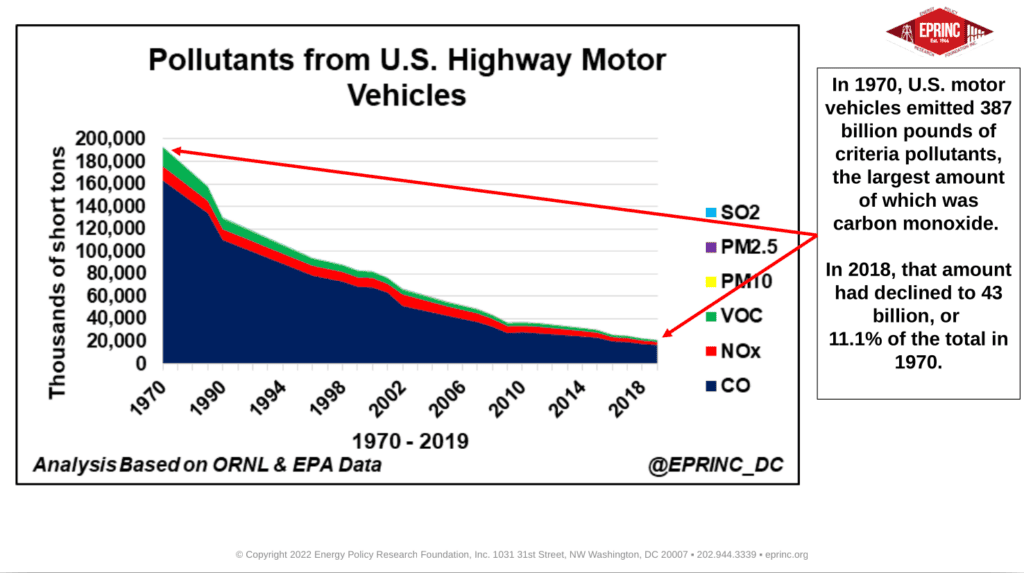
The comparison underscores the substantial gains in vehicle emissions performance achieved since 1970, driven by successive federal air quality standards and advances in automotive technology.


From the EPRINC Chart of the Week archive.