
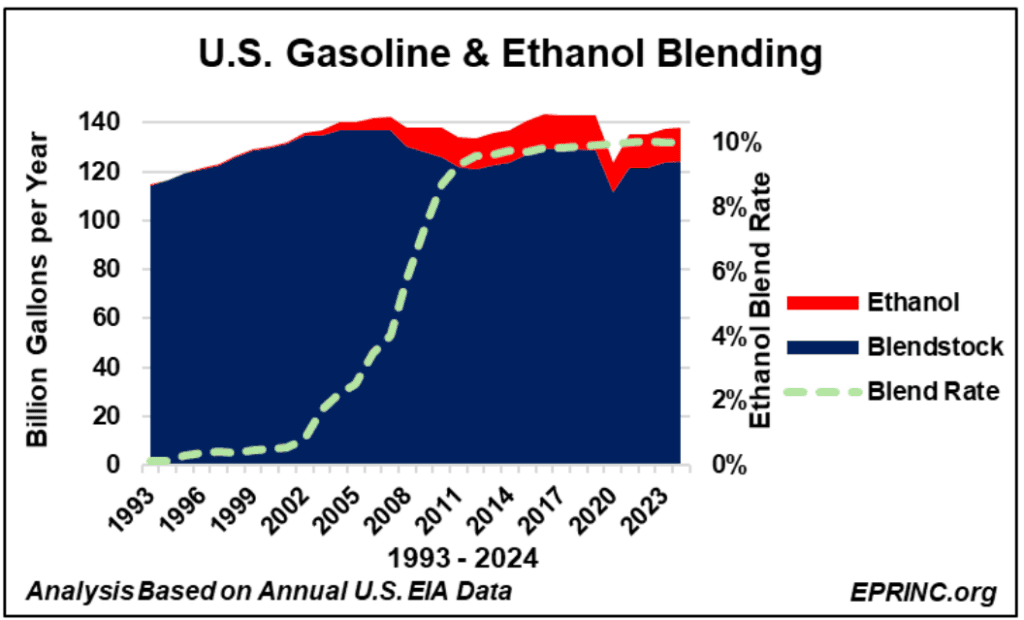
The Renewable Fuel Standard (RFS), first enacted by the U.S. Energy Act of 2005 and strengthened by the 2007 Energy Act, mandates the blending of biofuels into U.S. transportation fuels—ethanol into gasoline and biomass diesel into distillate. The volumetric mandates were codified in statute and subject to regular review by EPA, which holds primary jurisdiction over the program. Beginning in 2022, the mandates have been set directly by EPA in consultation with USDA, DOE, and involved parties.
The program remains contentious because of competing agricultural and petroleum interests. The RFS calls for 15 billion gallons of ethanol to be blended into the U.S. gasoline pool. The largest annual volume came in 2019, when 14.16 billion gallons of ethanol—9.9% of the total gasoline pool—were blended. In 2024, EPA required a blend rate of 12.5%, yet in the aggregate gasoline marketers still blended at roughly 10%: of 137.83 billion gallons of gasoline, 13.7 billion gallons were ethanol.
This gap reflects several factors. On the RFS side, the Renewable Identification Number (RIN) credit system permits credits earned from biomass diesel blending to be applied toward ethanol compliance even where no ethanol was blended, and small refinery exemptions (SREs) allow obligated parties to be exempt if they can legally demonstrate financial hardship. From the marketing side, a large share of the U.S. vehicle fleet cannot use blends above 10%—ethanol is corrosive to rubber fuel lines and gaskets unless fortified—and uncertainty persists over whether filling stations’ fuel tanks are certified to accept higher blends.
Since enactment there have been numerous reform efforts, including the proposed 2019 21st Century Transportation Fuels Act sponsored by former Congressmen John Shimkus (IL-15) and Bill Flores (TX-17). Current discussion centers on potential legislation to establish a national 10+% blending standard and to diminish the SRE provisions. If enacted, the supply of RINs would contract, driving up compliance costs that would then be passed on to consumers.
Regardless of the outcome, EPRINC’s research has found that the RFS adds substantial costs to the price of gasoline, with estimated annual total costs ranging from $14 to $45 billion, or an additional 11 to 35 cents per gallon. See EPRINC’s COW 2025-16, “The Renewable Fuel Standard (RFS) and Transportation Fuel Prices – Revisited,” published April 23, 2025.
From the EPRINC Chart of the Week archive.