
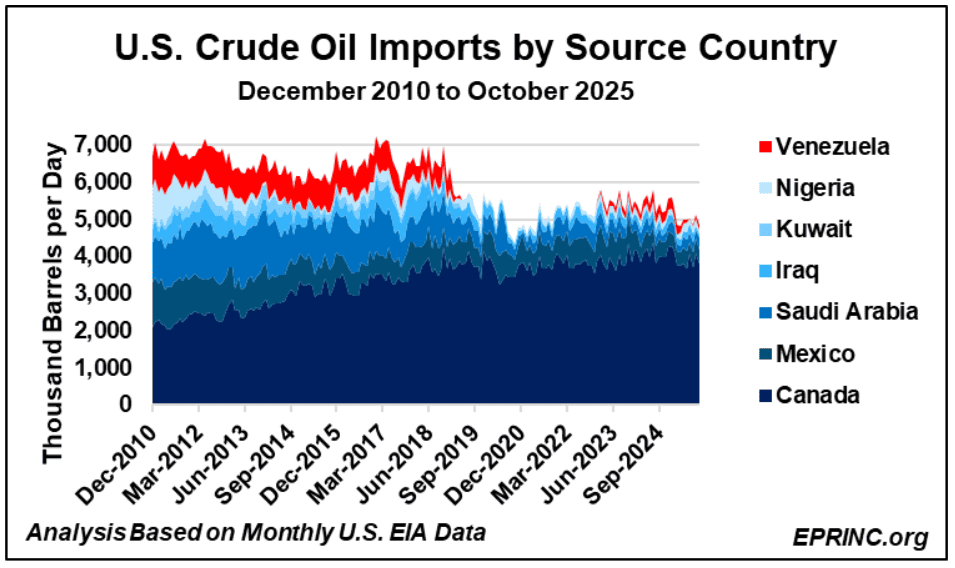
Until November 2025, Venezuela relied on Iranian and Russian condensate imports for diluent purposes. If prohibitions are put in place and Venezuelan crude oil production and exports begin to be restored, Venezuela might find itself competing with Canada for diluent, especially in the form of condensates.
Data availability for condensates, especially for lease condensate, is challenging since many producing countries either bundle production numbers with those of crude oil or only report them on an ad-hoc basis. Canada regularly reports both lease and plant condensate data; the U.S. reports plant condensate data but hasn’t reported lease condensate since 2022 (Figure 2).
Figure 2: Data for condensate disposition by application is limited at best.
EPRINC will host a virtual webinar “Venezuela’s Oil and Gas After Maduro” to be held Thursday, January 15, 2026 from 10:00 a.m. to 11:15 a.m. EST. Presenters and discussants include Ivan Sandrea, Rafael Sandrea, and Orlando Ochoa. Registration is available here: https://eprinc.us11.listmanage.com/track/click?u=a8d9ee0e4e837231f5d1d079f&id=d9b6e9126f&e=e3aef11b55.
EPRINC trustee and oil industry professional Ivan Sandrea continues to post his views on the potential for Venezuelan crude oil production. In his latest, he projects different scenarios and timelines: https://www.linkedin.com/posts/ivan-sandrea-98a610204_venezuela-oil-outlook-note-2-over-theactivity-7415137561775484928-4CST
His prior LinkedIn post was “Ten Principles for Rebuilding Venezuela’s Petroleum and Mineral Industries.” It can be found at this link: https://www.linkedin.com/feed/update/urn:li:activity:7413262901504798720/.

From the EPRINC Chart of the Week archive.