
California has some of the highest energy prices in the United States. According to the US Energy Information Administration, the state’s average residential electricity price was nearly double the national average in February (31.7 cents/kWh vs. 16.4 cents/kWh). California also has among the highest gasoline prices in the nation, reaching $4.6/gallon (regular), compared to the national average of $3.1/gallon as of May 5.
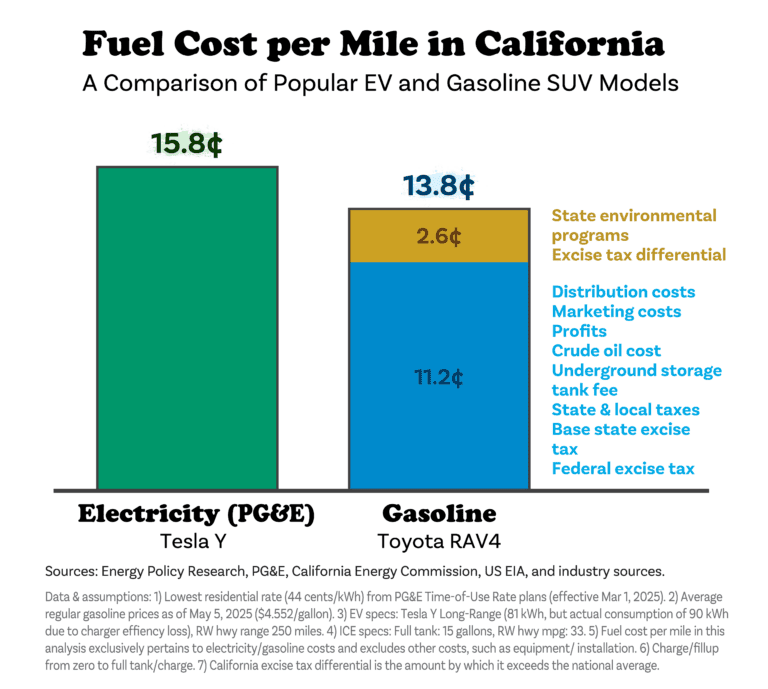
Based on PG&E’s updated residential rate plans, the fuel cost of driving an EV could be significantly higher than that of an internal combustion engine (ICE) car in the state. Our comparison of two SUV models—Tesla Y and Toyota RAV 4—shows that the EV fuel “premium” in California could be in excess of 14% compared to its ICE alternative. When excluding California’s environmental program fees and the state’s excise tax differential over the national average ($0.60/gallon vs. $0.28/gallon), the gap would increase to 41%. Without the cap-and-trade program, the low-carbon fuel standards, and hefty excise taxes, the gasoline cost in California (11.2 cents/mile) would be much closer to the national average of 9.5 cents/mile.
Various assumptions are involved in the study, so actual numbers will vary case by case. However, the analysis offers two main insights. First, despite the argument that EVs offer attractive fuel cost savings through electrification, gasoline remains cost-competitive in California. Second, without heavy taxes and environmental fees imposed on petroleum consumption, motorists in the state would see significant savings in vehicle fuel costs.
From the EPRINC Chart of the Week archive.