
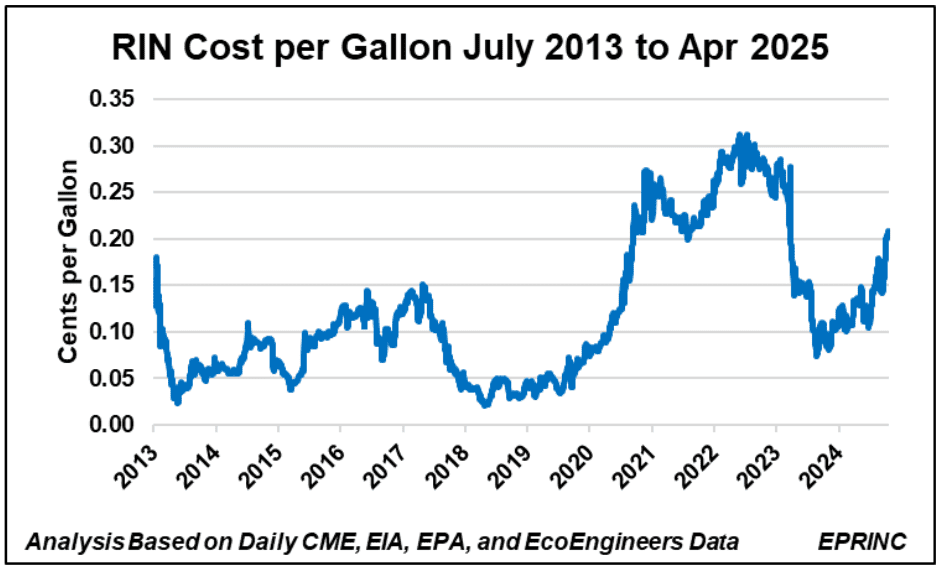
Under the Renewable Fuel Standard (RFS), refiners and importers are required to blend specified volumes of biofuels into transportation fuels. Compliance is demonstrated by acquiring and submitting Renewable Fuel Identification Numbers (RINs). The chart tracks the pass-through cost of RIN compliance, measured in cents per gallon, from 2013 through 2024.
The RFS includes discretionary policy and exemption components that each administration can apply with varying degrees of stringency. These decisions affect RIN prices, and that cost is added to the price of transportation fuels and passed on to consumers.
- During the final four years of the Obama administration, RIN costs trended upward, from about 5 cents per gallon in 2013 to 15 cents per gallon by early 2017.
- The first Trump administration reduced RFS requirements through aggressive use of small refinery exemptions, lowering the pass-through cost to about 5 cents per gallon.
- Under the Biden administration, small refinery exemptions were curtailed and the RIN burden rose to a range of 25 to 30 cents per gallon. Late in the term, biodiesel refineries built in anticipation of high renewable diesel blending mandates faced lower-than-expected mandates, producing a glut of RINs that drove prices down to a pass-through cost of about 8 cents per gallon.
Some subsequent increases in biofuel mandates have pushed RIN prices, and therefore pass-through costs, higher again. The pattern illustrates how administrative choices within the RFS—rather than fixed statutory volumes alone—shape the cost consumers ultimately bear at the pump.

From the EPRINC Chart of the Week archive.