
The U.S. Strategic Petroleum Reserve (SPR) was established in the 1970s in response to oil supply shortages caused by politically motivated embargoes and instability among Middle East producers holding low-cost, concentrated reserves. It was designed to hold approximately 750 million barrels in salt caverns along the U.S. Gulf Coast, close to key refining centers and pipelines able to move crude inland to refineries near consuming markets. The anticipated triggers for releases were disruptions to crude oil imports brought on by extreme weather, military conflicts, geopolitically motivated embargoes, and major supply infrastructure accidents.
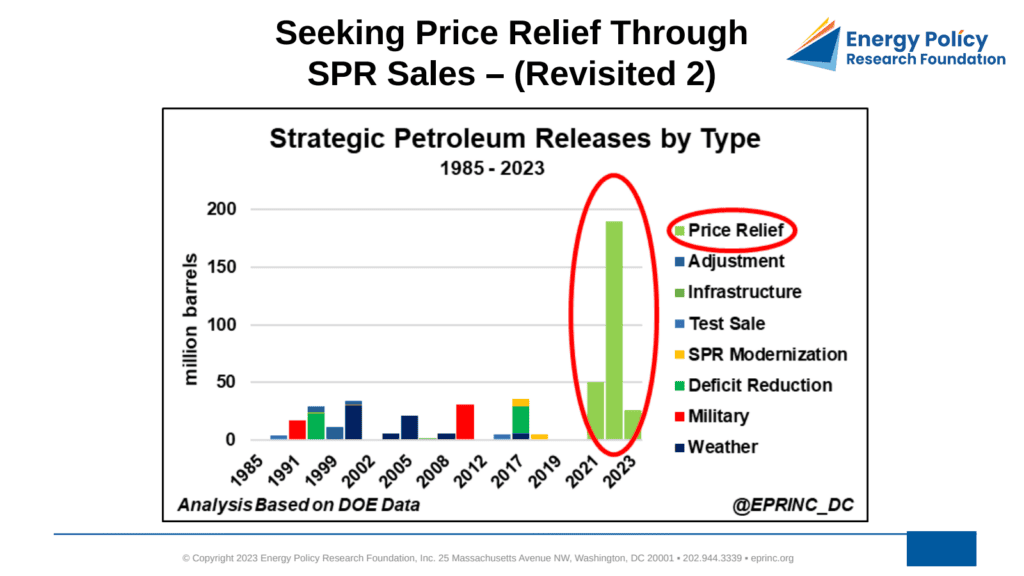
From 1991 to 2018, the SPR saw several releases ranging from 5 to 31 million barrels: five in response to major weather disruptions, two tied to military engagements, two related to SPR modernization, and several others for reliability and maintenance testing.
Over 2021 and 2022, U.S. transportation fuel prices climbed steeply to levels not seen in a decade. Beginning in November 2021, the Biden Administration authorized a series of SPR releases that continued through 2022 and concluded in March 2023, motivated by the goal of providing price relief to consumers. The total drawdown reached 220 million barrels, the largest release in the SPR’s history.
Price relief did materialize during the second half of 2022 and the first half of 2023. Prices have since risen back toward their earlier levels, however, driven in large part by considerable production cuts from OPEC+ producers.

From the EPRINC Chart of the Week archive.